
Vietnam's Robusta coffee farmers urged to adapt to extreme weather to protect bean quality
Vietnamese coffee farmers need to adopt climate-resilient farming practices, improve harvesting methods and strengthen links with businesses to protect Robusta yields and bean quality amid increasingly extreme weather, experts said at a workshop in Dak Doa Commune, Gia Lai Province, Vietnam's Central Highlands on Tuesday.
The workshop, titled 'Protecting Robusta Against Extreme Weather,' was jointly organized by Tuoi Tre (Youth) online vnewspaper, the Dak Doa administration, Golden Coffee, a Vietnamese coffee producer and exporter, and Petrovietnam Ca Mau Fertilizer Corporation.
The event brought together experts and 50 representative coffee-growing households to discuss ways to help farms adapt to climate change.
Extreme weather threatens Robusta production
Nguyen Quang Duc, deputy chairman of the Dak Doa administration, said Robusta coffee is a key source of income for thousands of local households.
The commune has nearly 3,200 hectares of coffee plantations, producing around 1,000 metric tons of green coffee beans annually.
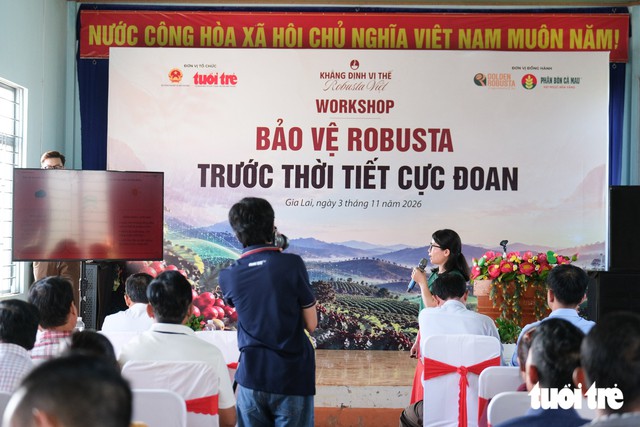
An overview of the workshop titled 'Protecting Robusta Against Extreme Weather' in Dak Doa Commune, Gia Lai Province, Vietnam's Central Highlands, November 3, 2026. Photo: Tan Luc / Tuoi Tre
About 950 hectares are now part of sustainable coffee production chains certified under the Common Code for the Coffee Community, an international sustainability standard originating in Germany, while several local specialty coffee products have earned three- and four-star ratings under Vietnam's One Commune One Product program.
However, extreme weather, including prolonged heat and drought as well as heavy off-season rainfall, is posing serious challenges to coffee cultivation, Duc said.
These conditions increase pest and disease risks, reduce yields and bean quality, and make harvesting and post-harvest storage more difficult.
To help farmers adapt, the local administration has encouraged a gradual shift from chemical fertilizers to organic and microbial fertilizers, along with improved farming techniques, canopy pruning, soil erosion prevention and better water management.
It has also promoted water-efficient irrigation systems, maintenance of irrigation canals, stronger agricultural value chains and the digitalization of coffee-growing area data.

Nguyen Quang Duc, deputy chairman of the Dak Doa administration in Gia Lai Province, Vietnam's Central Highlands, speaks at the workshop titled 'Protecting Robusta Against Extreme Weather,' November 3, 2026. Photo: Tan Luc / Tuoi Tre
Ripe-fruit harvesting key to improving bean quality
Pham Thi Hong Dao, head of certification and project development at Golden Coffee, warned that the El Niño phenomenon is forecast to bring prolonged drought during the coming coffee crop, potentially affecting production areas across Vietnam.
Both prolonged heat and drought and persistent unseasonal rainfall can damage coffee cherries throughout their growth, harvesting and storage stages.
Extreme weather can reduce bean size and the proportion of properly developed beans, increase the number of underdeveloped beans and affect coffee flavor, potentially leaving products below export standards.
Fluctuating sunshine and rainfall also increase the risk of mold during post-harvest drying, Dao said.
She advised farmers to take several measures to make their plantations more resilient.
These include planting more shade trees, intercropping coffee with pepper, fruit trees or timber trees, and adopting smart, water-saving irrigation systems, including drip irrigation.
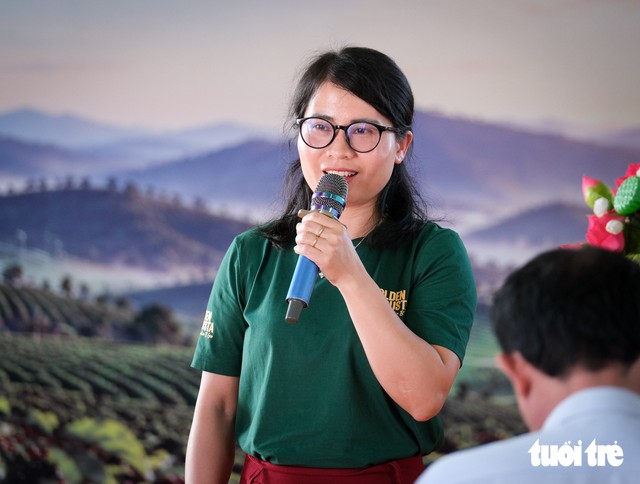
Pham Thi Hong Dao, head of certification and project development at Golden Coffee, speaks at the workshop titled 'Protecting Robusta Against Extreme Weather,' November 3, 2026. Photo: Tan Luc / Tuoi Tre
Farmers should regularly inspect their plantations to detect pests and diseases early, particularly mold, mealybugs and anthracnose, which can damage coffee cherries in hot and humid conditions.
She also recommended avoiding pesticide applications close to harvest time, reinforcing trees ahead of storms, improving drainage to prevent waterlogging and storing rainwater in ponds and lakes for use during dry periods.
Switching to organic fertilizers can also improve soil conditions and support sustainable coffee production.
Dao noted that many farmers still rely on traditional irrigation methods, including flooding the base of coffee trees with water from dug wells, ponds and boreholes.
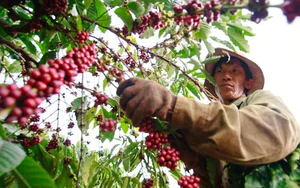
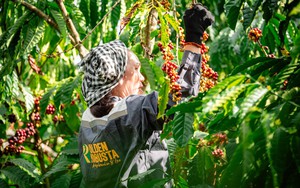
Harvesting practices also need improvement, as many farmers begin picking when only around 70 percent of the cherries are ripe.
In contrast, farmers participating in production links with Golden Coffee are encouraged to harvest when more than 85 percent of the cherries are ripe.
They receive higher purchase prices in return, as a greater proportion of ripe cherries helps improve coffee quality and flavor, she said.
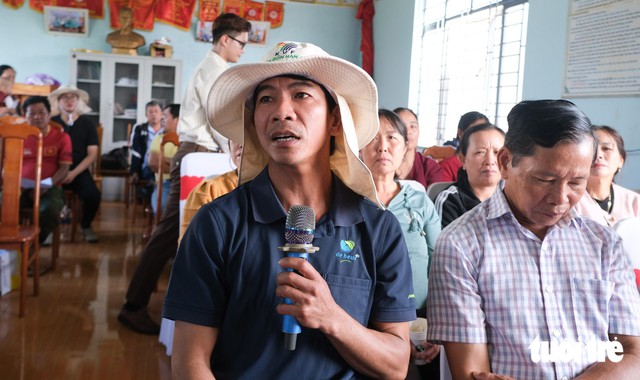
A farmer asks experts about ways to improve the quality of coffee-growing areas at the workshop titled 'Protecting Robusta Against Extreme Weather,' November 3, 2026. Photo: Tan Luc / Tuoi Tre
Stronger value chains needed to raise Robusta's global standing
Dinh Huu Vinh, general director of Golden Coffee, said maintaining Vietnam's leading position in global Robusta production and improving its coffee quality require coordinated efforts from all stakeholders, from cultivation to processing.
The sector needs to shift its focus from increasing output to creating greater value and ensuring sustainability, prioritizing quality over short-term volume growth and standardizing farming practices through smart agricultural technologies.
Improving harvesting and post-harvest processing is also essential.
He called for stronger value-chain links and the development of cooperatives to connect farmers more closely with businesses, ensuring stable outlets for their produce and more predictable prices.
Building distinctive brands for local growing areas would also help strengthen the reputation of Vietnamese coffee in international markets.
Vinh said Golden Robusta would serve as a strategic bridge to help Vietnamese Robusta overcome market barriers and enter higher-value segments.
The company aims to achieve this through deeper processing, consistent quality control, sustainable sourcing, and compliance with international environmental standards and transparent trade requirements.
Vinh Tho - Tan Luc / Tuoi Tre News