


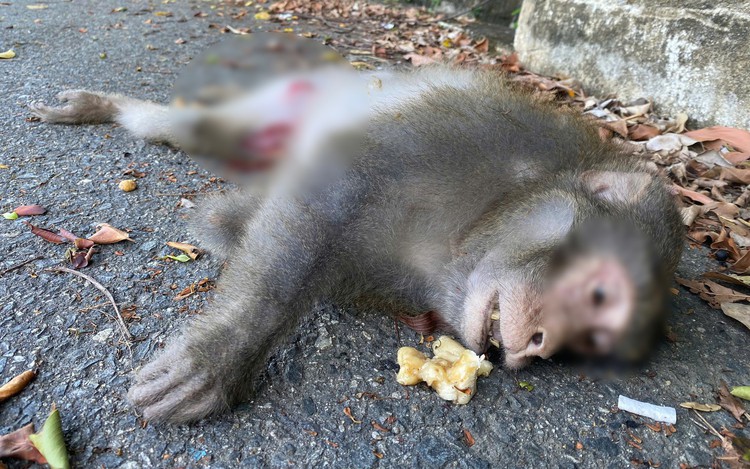
A wild male monkey lies motionless on a road on Son Tra Peninsula in Da Nang City, central Vietnam, with half a banana beside its mouth. Photo: Thanh Truc / Tuoi Tre
Thanh Truc, who photographed the injured primate, told Tuoi Tre (Youth) online newspaper that the incident occurred on Friday when she and a group of friends were searching for another monkey reportedly caught in a leg-hold trap near Bai Bac Border Guard Station.
Along the way, she discovered the male monkey lying motionless by the roadside near a blood stain.
According to Truc, eyewitnesses reported that someone had tossed a banana onto the road to lure the animal down for photographs.
“The monkey was hit in the abdomen by a vehicle while putting the banana into its mouth after picking it up. When I approached it, its body was still warm and it was barely breathing, with a half-eaten banana still in its mouth,” she said
It succumbed to its injuries shortly after.
Truc noted that the tragedy was not an isolated case, but rather a stark reflection of the harmful impacts of human interference on the peninsula.
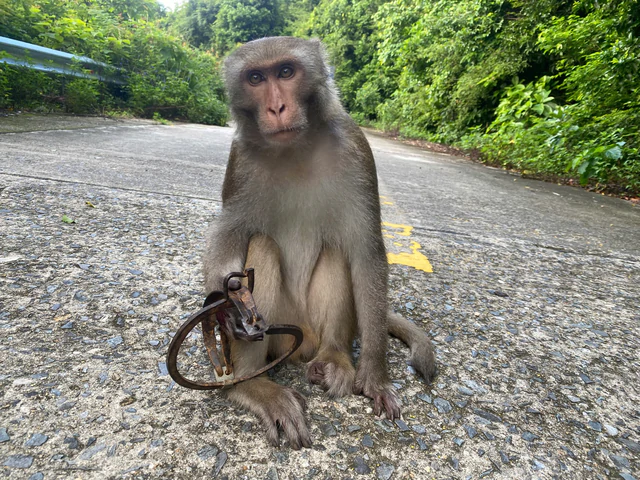
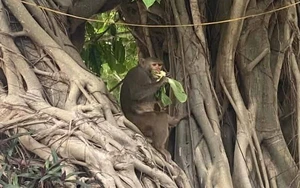
A monkey on Son Tra Peninsula in Da Nang City, central Vietnam, caught in a leg-hold trap, reflecting the multiple threats wildlife faces in the area. Photo: Thanh Truc / Tuoi Tre
While wild monkeys naturally inhabit the high forest canopy and tend to avoid humans, the persistent practice of visitors bringing food to Son Tra has severely altered their behavior, she explained.
As monkeys increasingly associate humans with readily available food, their natural foraging instincts weaken.
Instead of foraging in the wild, they now descend onto roads and follow visitors to beg or scavenge for food left on the ground, exposing themselves to constant traffic hazards.
Feeding wildlife threatens natural behavior
Despite repeated warnings from authorities, some visitors continue to secretly feed wild monkeys on Son Tra Peninsula, Truc told Tuoi Tre.
While some argue that the forest lacks sufficient food and that visitors are merely helping the animals survive, Truc emphasized that Son Tra's rich natural ecosystem provides a diverse diet of leaves, flowers, wild fruits, seeds, and insects.
Feeding them bananas and processed foods not only erodes their survival instincts but can also seriously compromise their health.
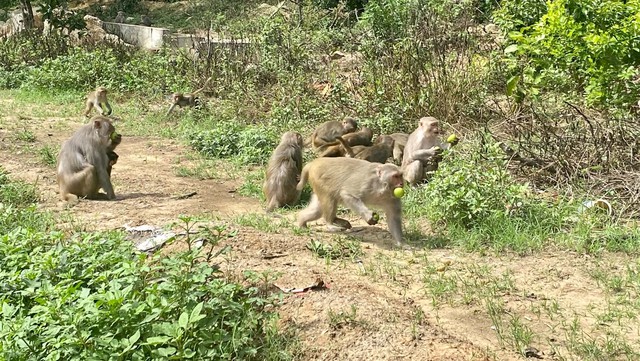
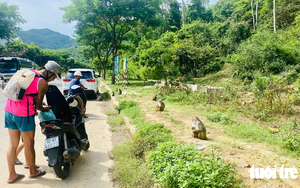
Monkeys gather in an area on Son Tra Peninsula in Da Nang City, central Vietnam, to receive food from visitors -- a common sight despite warning signs and stationed personnel. Photo: Truong Trung / Tuoi Tre
Echoing these concerns, the GreenViet Biodiversity Conservation Center warned that feeding wild animals carries severe long-term consequences, regardless of the giver's intentions.
A major concern is the gradual loss of natural foraging skills across successive generations.
Young monkeys may stop learning how to climb trees and gather wild fruits from their parents, relying instead on humans for sustenance.
Consequently, GreenViet cautioned that these animals risk becoming increasingly dependent, effectively domesticated, and incapable of living independently in the wild.
Authorities step up warnings
In response to these ongoing issues, the Management Board of Son Tra Peninsula and Da Nang Tourism Beaches announced that it has coordinated with local authorities in Son Tra Ward to install warning signs prohibiting the feeding of wild animals.
According to the report, the management board has also stationed personnel at key locations where monkeys frequently gather to beg for food from visitors.
Nevertheless, the practice remains widespread despite frequent public awareness campaigns and official reminders, continuing to pose serious risks to both wildlife welfare and the safety of visitors and local residents.


Max: 1500 characters
There are no comments yet. Be the first to comment.