


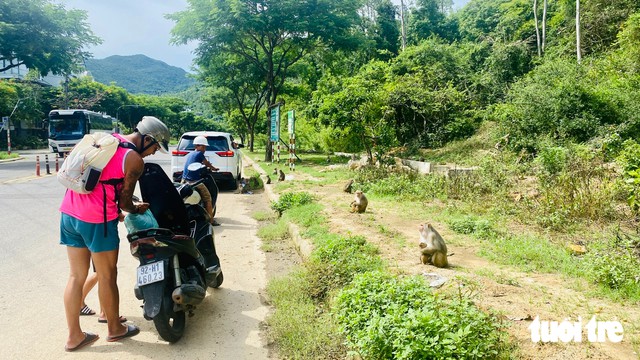
Visitors regularly feed monkeys on Son Tra Peninsula, a practice that can harm wildlife. Photo: Truong Trung / Tuoi Tre
A recent incident in which people dumped food on the ground for monkeys before leaving the plastic bag behind on Son Tra Peninsula in northeastern Da Nang City, central Vietnam, has sparked ongoing discussion on social media.
Feeding wild monkeys can alter their natural behavior
The issue has been reported repeatedly, highlighting how people continue to feed wildlife on Son Tra Peninsula despite repeated warnings from authorities.
Thanh Truc, a frequent visitor to Son Tra, said that even at spots where signs prohibit feeding wildlife, many people still casually throw food to the monkeys.
“Monkeys here are now like children waiting for gifts. During the day, they just sit here waiting for food,” Truc said.
According to lawyer Pham Van Viet, Vietnam has several regulations that allow authorities to penalize acts that affect wildlife, through both administrative sanctions and criminal prosecution.
In terms of administrative penalties, Decree No. 35/2019/ND-CP provides for penalties for administrative violations against regulations on forestry and was amended and supplemented by Decree No. 07/2022/ND-CP. Decree No. 45/2022/ND-CP provides for penalties for administrative violations in the field of environmental protection.
There are also other regulations governing violations related to wildlife and environmental protection.
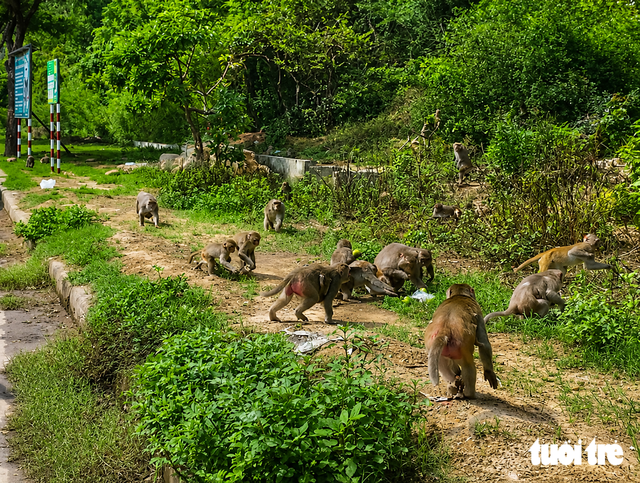
Son Tra monkeys scramble for food from a person. Photo: Truong Trung / Tuoi Tre
Regarding criminal liability, Vietnam’s 2015 Criminal Code, as amended in 2017, also provides for criminal prosecution for certain violations of regulations governing nature reserves, as well as the illegal hunting, killing, raising, keeping, transporting or trading of animals on the list of endangered, precious and rare species prioritized for protection, and other acts when they meet the legal threshold for a criminal offense.
However, lawyer Viet said that for the practice of feeding monkeys without authorization, which is widespread on Son Tra Peninsula, current law does not yet provide specific administrative penalties for the act.
“This is a notable gap in wildlife management in places where people and animals frequently come into contact. Feeding wildlife may seem like a small act by a visitor or resident, but when it happens regularly, it can alter animals’ natural foraging behavior," Viet stressed.
"Meanwhile, Son Tra is an area with a natural ecosystem where inappropriate human interference with wildlife needs to be limited,” he said.
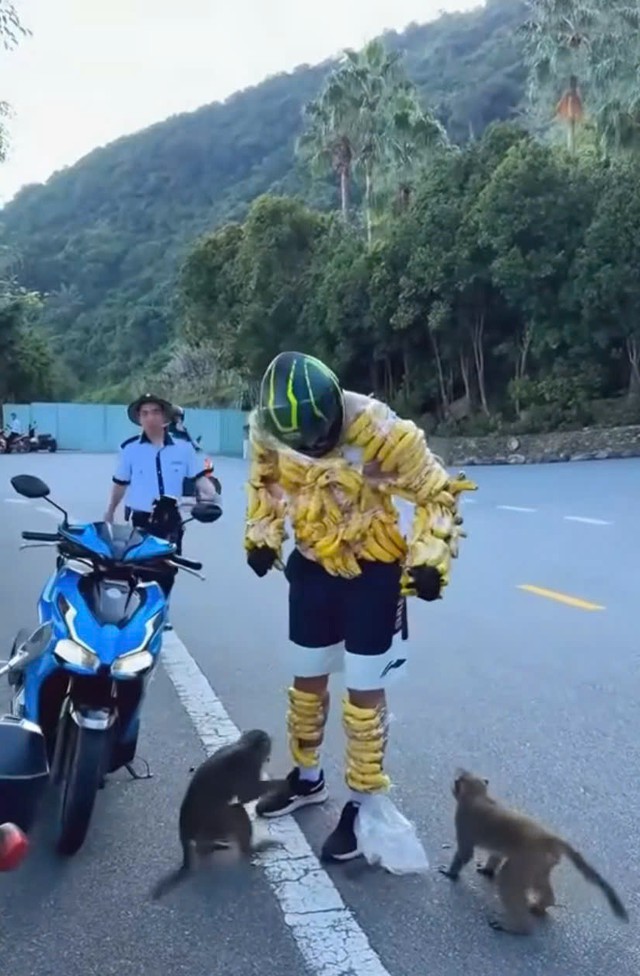
A person 'dressed in bananas' was warned after approaching monkeys on Son Tra Peninsula. Photo: Screenshot
Other countries impose fines. Will Vietnam follow?
According to lawyer Pham Van Viet, several countries have regulations that penalize people for feeding wildlife.
Violators can face fines ranging from US$100 to $1,000, imprisonment of up to six months, or both. If a person continues to violate the law after being convicted, the penalties may be increased.
In Singapore, wildlife protection laws prohibit people from intentionally feeding any wild animal unless they have written approval from the competent authorities. A first-time offender can be fined up to about $3,900, while a second or subsequent offence can result in a fine of up to about $7,800.
In India, the Wild Life Protection Act also prohibits teasing, molesting, injuring or feeding animals in zoos. Such acts can result in imprisonment or a fine, with harsher penalties for repeat offences.
Drawing on these examples, lawyer Viet said Vietnamese authorities should study international practices and develop appropriate measures rather than relying solely on public awareness campaigns and warnings.
He said authorities should consider adding unauthorized feeding of wildlife to the list of acts subject to administrative penalties.
The rules should clearly prohibit activities such as feeding, luring, or attracting wildlife with food without approval from a competent authority.
They should also set specific penalties for individuals and organizations, with harsher penalties for repeat or deliberate violations, or for violations committed in nature reserves, special-use forests, and areas where wildlife congregates.
Penalties are needed to deter wildlife feeding
Lawyer Viet also proposed adding remedial measures requiring violators to clean up food and waste resulting from the violation.
Beyond penalties, enforcement should also be strengthened through regular inspections and patrols, including interagency inspection teams at hotspots where people frequently feed monkeys, as well as signs, banners and notices prohibiting the feeding of monkeys.
In particular, lawyer Viet said tour guides should be required to commit to preventing their guests from feeding the monkeys.










Max: 1500 characters
There are no comments yet. Be the first to comment.