



Hanoi is experiencing a sunnier and warmer autumn than in previous years. Photo: Nguyen Hien / Tuoi Tre
The phrase 'a winter without cold weather' has sparked widespread discussion on social media in recent days, with many wondering whether this winter will indeed be unusually warm, as northern Vietnam remains hot ahead of the traditional start of winter.
Why has northern Vietnam remained hot in late autumn?
Data from the National Center for Hydro-Meteorological Forecasting showed that northern Vietnam experienced four widespread heatwaves between August and the end of October.
During these heatwaves, maximum temperatures commonly reached 36-39 degrees Celsius in August, with some locations recording even higher figures.
Temperatures in September and October generally ranged from 35.5 to 37.5 degrees Celsius.
Hanoi also recorded temperatures exceeding 37 degrees Celsius in both September and October.
In addition to the heatwaves, northern Vietnam, including Hanoi, experienced extended periods of dry, sunny weather in recent months, prolonging the hot and humid conditions even after autumn began.
Nguyen Van Huong, head of the weather forecasting division at the National Center for Hydro-Meteorological Forecasting, said many weather stations in northern Vietnam recorded daily maximum temperatures that matched or exceeded historical records for the same period over the past two months.
Thirteen weather stations recorded such temperatures in September, while the figure rose to 42 out of 88 stations in October.
Northern Vietnam also experienced widespread heat for the first time in October since 1991.
As a result, average temperatures in the region were 0.5-1 degree Celsius above the long-term average in August and September, and 2-3 degrees higher in October.
“These are signs of unusual temperature patterns and weather conditions in northern provinces,” Huong said.
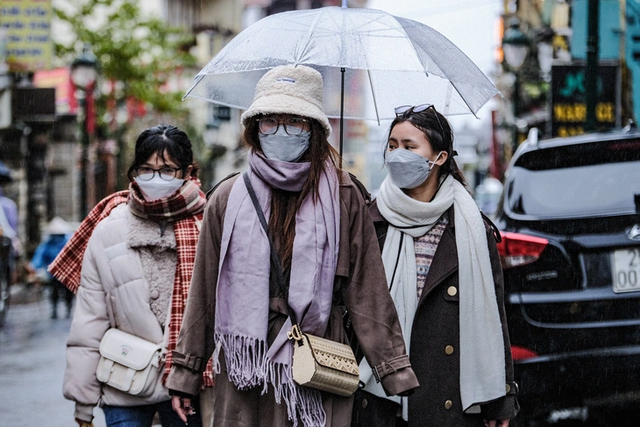
Northern Vietnam is forecast to receive a cold air mass during the first 10 days of November 2026, bringing rain and cooler weather. Photo: Nam Tran / Tuoi Tre
Winter expected to be 1-2 degrees warmer, with fewer severe cold spells
Explaining the unusually hot weather in northern Vietnam ahead of winter, Huong said the main cause was the very strong El Niño event currently underway.
Sea surface temperatures in the Niño 3.4 region were 2.1 degrees Celsius above the long-term average in September and rose to 2.4 degrees in mid-October.
“Statistics from years with very strong El Niño events show that average monthly air temperatures from the autumn of one year to the summer of the following year are generally higher than the long-term average, with some months recording increases of 1-2 degrees Celsius,” he said.
Another contributing factor was the strong subtropical high-pressure ridge, which covered northern Vietnam in recent months and generated descending air currents.
This increased sunshine intensity and pushed temperatures above the seasonal average.



Regarding cold air activity in the coming weeks, Huong said northern Vietnam could be affected by a cold air mass in the first half of November, bringing rain and cooler weather.
The national weather agency forecasts a 96 percent probability that El Niño will maintain very strong intensity through January 2027, and expects the phenomenon to persist until early summer next year.
Consequently, cold air masses are expected to be weaker than the long-term average this winter.
Severe cold spells are likely to occur later than usual, while the number of days with severe cold in northern and north-central Vietnam is expected to be lower than the average for the same period in previous years.
However, short-lived cold spells that cause sharp temperature drops remain possible.
The number of days with light rain and drizzle in northern Vietnam is also expected to be lower than usual toward the end of winter.
Average temperatures in November are forecast to be 1-2 degrees Celsius above the long-term average, while those in December and January 2027 could be 0.5-1.5 degrees higher.
From February to April 2027, average temperatures are expected to exceed the long-term average by 1-2 degrees, with some areas potentially recording increases of more than two degrees.


Max: 1500 characters
There are no comments yet. Be the first to comment.