


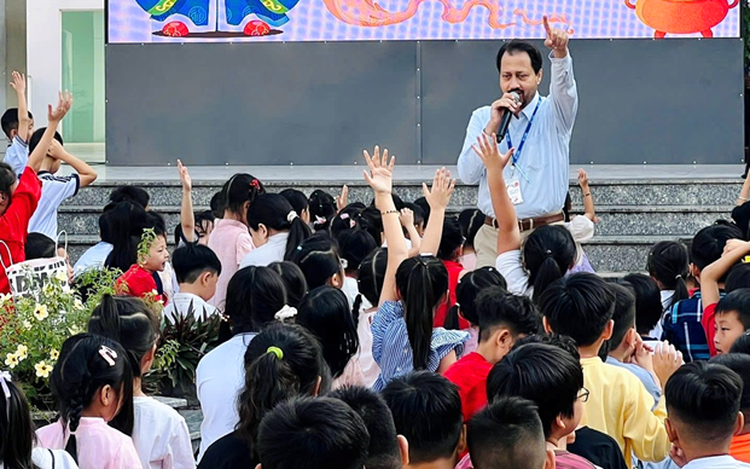
Children participating and competing at a school quiz challenge. Photo: Author
When I think about my own school years, I do not remember only the lessons I was taught. I remember the people. I remember friendships, disagreements, group activities, teachers who challenged me, classmates who were different from me and moments when I had to speak up, listen, compromise and find my place among others.
My schooling was a wholesome and immersive experience. More than anything I learned from textbooks, it was that experience of being part of a community that continues to shape my life and choices to this day.
The Ho Chi Minh City Department of Education and Training has drawn attention to cases in which children were homeschooled through their elementary years before seeking admission to school at Grade 6.
I fully support the government's decision to take a closer look at this issue. Not because homeschooling can never work, but because children's education is too important to be left without clear standards, accountability and consideration of their wider development.
Homeschooling may have some advantages. A child may learn at their own pace, receive more individual attention and spend more time exploring areas of interest. For some families and children, particularly in exceptional circumstances, this flexibility may be valuable.
The question is what happens to everything else.
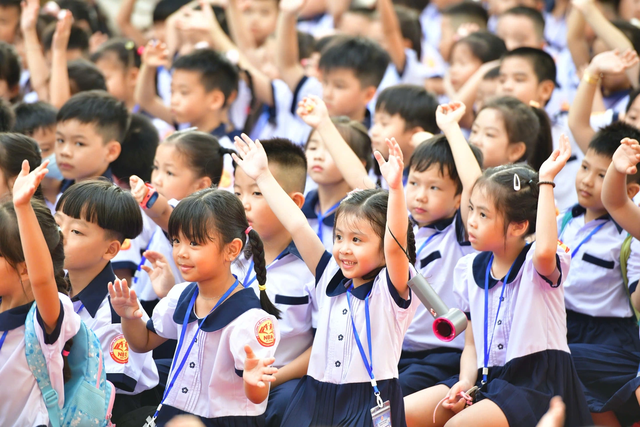
First graders at Nguyen Binh Khiem Elemetary School, Ho Chi Minh City, Aug. 24, 2026. Photo: Duyen Phan / Tuoi Tre News
The unplanned curriculum of the schoolyard
At a Vietnamese school, for example, a child does not merely learn communication simply by reading about it. They learn it by communicating. They do not learn collaboration merely by being told what it means. They learn it by working with other people.
The same is true of empathy, negotiation, patience and handling disagreement.
School creates thousands of small opportunities for these every day lessons. In a Vietnamese public school, a child may play shuttlecock in the schoolyard, compete in badminton, work together to decorate the classroom before Tết, or prepare with classmates for a school performance.
A child may have to work with someone they would not have chosen as a friend, disagree during a group project, speak in front of others, lose a competition, apologise after an argument, help a classmate or discover that another person's perspective is very different from their own.
These moments may look insignificant compared with mathematics, science or English. They are not. They are part of education.
In Vietnam, school is not simply a place where children follow a curriculum. It is also a social environment in which they learn to communicate, cooperate and navigate relationships with people who may think and behave differently from them.
Of course, committed homeschooling families can create opportunities for social interaction through clubs, sports, activities and community groups. But there is an important difference. In school, many of these experiences happen naturally. At home, they have to be deliberately designed, organised and maintained.
That distinction matters.
There is another issue: accountability.
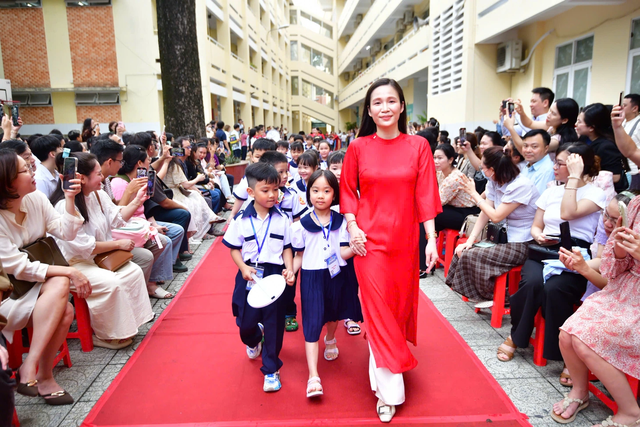
First-grade students are guided into their classrooms by their homeroom teachers on the first day of school at Nguyen Binh Khiem Elementary School, Ho Chi Minh City, Aug. 24, 2026. Photo: Duyen Phan / Tuoi Tre News
Vietnam's education landscape offers families an increasing range of choices, from public and private schools to international programs and other forms of educational provision. Choice can be valuable, but it also requires information.
Parents considering homeschooling should ask: Who recognises the program in Vietnam? What qualifications do the teachers have? How is learning assessed? What standards does the program follow? And, most importantly, will the qualification or certificate be recognised when the child needs to transfer into a Vietnamese school or continue to the next stage of education?
A certificate issued by an education centre is not automatically evidence of recognised academic achievement.
Parents should be able to understand what terms such as authorised, accredited, or international actually mean, who stands behind the program and what educational pathway it provides.
This does not mean Vietnamese parents should have no educational choice. It means choice should come with responsibility and transparency.
Is the child developing friendships? Are they learning to communicate with people who are different from them? Are they developing independence and confidence? Do they have regular opportunities to collaborate, disagree, negotiate and solve problems with others?
These questions matter just as much as whether they are completing their mathematics or English curriculum.
The social architecture of schools
It is an immersive social environment where children encounter people, ideas, personalities and situations they would not necessarily choose for themselves. That can sometimes be uncomfortable. But learning to navigate that discomfort is part of growing up.
My own schooling did not simply teach me what to know. It helped teach me how to communicate, work with others, deal with disagreement and function as part of a wider community.
Those lessons have stayed with me far longer than many individual facts I learned in a classroom.
That is why I support the direction taken by Vietnam's education authorities in seeking greater clarity around homeschooling and ensuring that children receive education within a framework that protects both academic standards and their wider development.
I would not support homeschooling as the default for elementary-age children. Not because learning at home cannot work, but because we should be careful not to confuse education with instruction.
A child can receive instruction almost anywhere.
Education, at its best, prepares a child not only to pass a test, but to participate in life.
And life is not lived alone.
Children who have been homeschooled and later enter Vietnam's formal education system should not be treated as problems to be fixed. They may need time to adjust to classrooms, routines, group work and unfamiliar peer relationships.
Teachers should approach that transition with empathy and patience, identify gaps without judgement and help these children build confidence and a sense of belonging.
After all, education should not be about proving that one system has defeated another. It should be about asking what is best for the child.








Max: 1500 characters
There are no comments yet. Be the first to comment.