


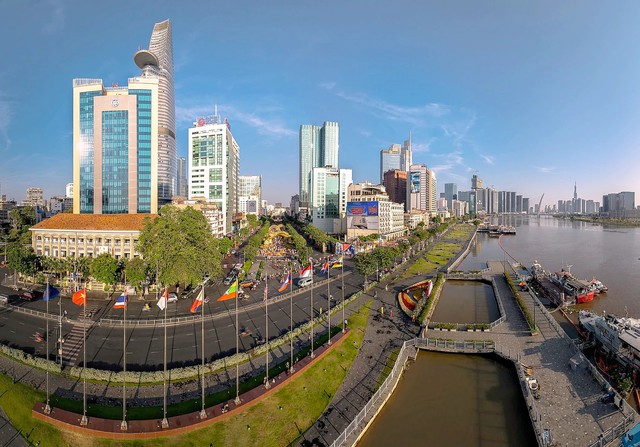
Ho Chi Minh City can serve as a gateway for visitors to continue exploring the cultural, historical, and natural attractions of the wider region and the country. Photo: Le Anh Tuan / Tuoi Tre
The strength of a megacity is truly established only when what it accumulates within can be transformed into appeal, connectivity, and influence that extend beyond the city itself.
For Ho Chi Minh City, the Urban Development Law provides an institutional framework that can bring together the city’s major assets, from transport, rivers and the sea, commerce, and technology to culture, heritage, and collective memory, within a new model of urban development.
Tourism is where the world can experience that vitality firsthand.
When a journey leaves visitors with not only memories of a destination but also a deeper understanding of, goodwill toward, and trust in Vietnam, the value created goes far beyond the figures recorded by the tourism industry.
Megacity ambitions require a different way of thinking about tourism
What matters when viewing the Urban Development Law from a tourism perspective is not how many mechanisms the law specifically provides for the sector.
Its broader significance lies in the development space it creates for a special urban area, from greater decentralization and autonomy in policymaking to the ability to pilot new models.
Article 8 provides room to pilot mechanisms and policies across a broad range of fields, including new economic models based on science, technology, innovation, digital transformation, culture, sports, and tourism.
What is notable is not the number of sectors listed, but the development philosophy behind them, one that allows the city to explore approaches that are not confined by old frameworks.
What makes a city special, therefore, is defined not only by its population, area, or economic weight, but also by its ability to turn its special status into the capacity to create something distinctive.
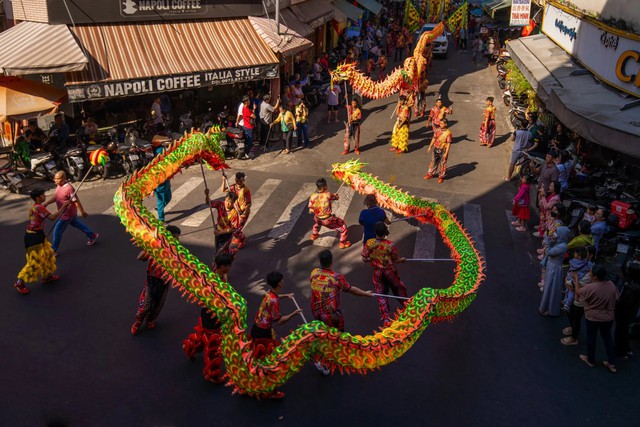
Heritage, culture, and street life give a city a distinctive character that is difficult to replicate. Photo: Pham Quynh Nga / Tuoi Tre
For tourism, this shift in perspective is particularly important.
A tourism industry can grow by adding more hotels, businesses, products, and markets, but an internationally significant destination is shaped by the quality of the city as a whole.
People may decide to visit Ho Chi Minh City because of a particular dish, event, architectural landmark, or historical memory, but what stays with them after the trip is often shaped by experiences that do not carry the label of tourism at all: how easy it is to get around, how safe the streets feel, a patch of greenery amid a dense urban environment, a riverside where one can stroll at leisure, the rhythm of the city after dark, the way heritage is preserved and retold, or sometimes simply the kindness encountered in a brief interaction.
Visitors do not experience an industry. They experience a city.
For a megacity, the quality of tourism increasingly becomes a reflection of the quality of the urban environment itself.
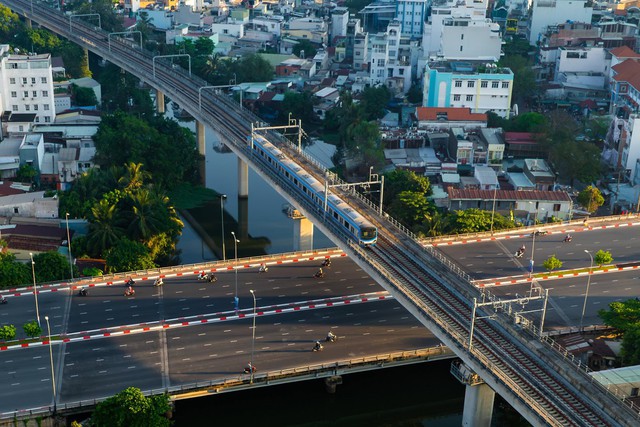
New public transport routes could offer visitors new ways to access Ho Chi Minh City’s cultural, culinary, and heritage sites. Photo: Nguyen Sinh Minh Trung / Tuoi Tre
The future of Ho Chi Minh City tourism lies not only in what the tourism sector can do on its own, but in the ability of the entire urban organism to function better, connect more effectively, and create a way of life rich enough to draw others in. Ultimately, a major destination is not built alongside a city. It is born from the city itself.
When urban quality becomes an attraction
A megacity thrives on flows of people, goods, capital, knowledge, creativity, and culture. Its vitality is determined not only by the scale of those flows, but by its ability to bring them together and generate new value.
This spirit is evident in Article 13, which places transit-oriented development in relation to land use, commerce, services, public spaces, and other urban functions.
A metro line, therefore, does more than shorten travel times.
It can change the way people experience Ho Chi Minh City, bring areas once considered far apart into a single journey, open up new areas for exploration around stations, and connect everyday life with architecture, cuisine, art, commerce, and heritage.
A city that is easier to move around is also easier to explore. Rivers and the sea should likewise be viewed through a broader lens.
Article 18 gives the city room to develop policies for infrastructure and new, priority marine economic sectors with broad spillover effects. For tourism, this is about more than creating new coastal attractions.
It gives Ho Chi Minh City a chance to rethink how it develops: moving beyond a city centered mainly on its downtown core toward one that makes greater use of its rivers and coastline and connects more closely with international trade.
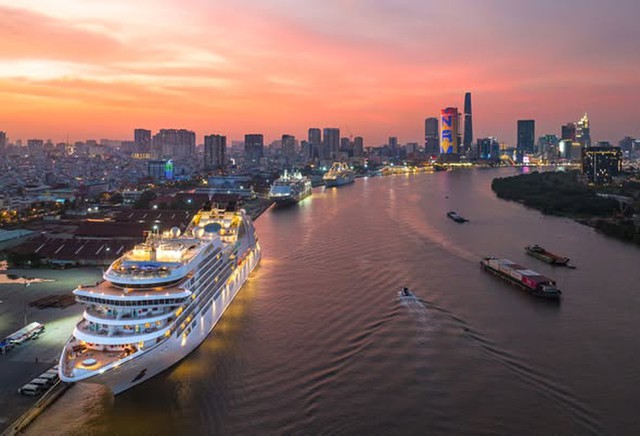
The city’s rivers and waterways are among its advantages for expanding tourism products and experiences. Photo: Tran Dinh Hai / Tuoi Tre
The sea and rivers could therefore open up new areas for development while also helping Ho Chi Minh City strengthen its position in the region and the world.
Following the same logic, Article 20 opens policy space for service and commercial sectors, while Article 21 establishes mechanisms for a free trade zone and an integrated logistics zone.
These spaces do not need to be labeled tourism products. Their significance lies in their potential to increase the intensity of interaction within the megacity.
As more businesspeople, professionals, investors, members of the creative community, conference visitors, and international communities are present in the city, service standards rise, dining and entertainment become more diverse, and new spaces for interaction emerge.
Tourism grows within that very vitality.
The expectation, therefore, should not be that every sector serves tourism directly, but that every step forward in urban development makes Ho Chi Minh City easier to navigate, more vibrant, and more rewarding to explore.
As urban quality improves, the city’s appeal as a destination can grow in a more sustainable way than through time-limited promotional campaigns.
When identity becomes part of world’s memory
A city can be highly modern and yet still struggle to remain in people’s memories. Skyscrapers, shopping malls, airports, metro systems, and modern entertainment districts are increasingly common in cities around the world, and by themselves they do not create an identity.
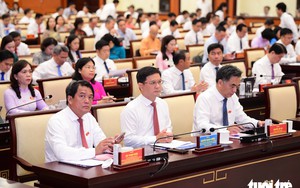
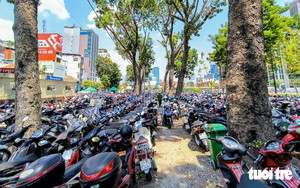
What people tend to remember lies in what is harder to replicate: places where history continues to live in the present, where the new arrives without erasing the traces of time, and where a city opens itself to the world while retaining its own voice.
That is why Article 26 is significant not merely because it contains provisions on culture, sports, and tourism.
It creates space for the nighttime economy, cultural, commercial, and sports spaces, cultural and creative industries, service models, and tourism products, while also providing additional mechanisms to protect, manage, and promote the value of heritage sites, cultural and historic areas, and architecturally significant buildings.
The deeper value lies in the ability to place culture within the urban development process itself. A city may be recognized by its physical form, but it is remembered through its culture.
Heritage preserves the depth of time; creativity ensures that inherited values do not become a motionless past; and tourism brings that living culture into encounters with people from outside.
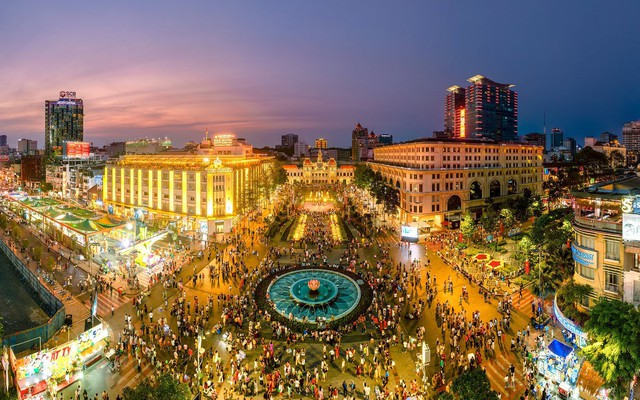
International visitors explore Ho Chi Minh City, gaining a sense of a modern, open Vietnam with rich cultural depth. Photo: Le Anh Tuan / Tuoi Tre
Ho Chi Minh City has an abundance of material from which such memories can be formed.
Historic spaces interwoven with modern life, cultural diversity, street life, cuisine, waterways, neighborhoods shaped over different periods, a spirit of openness, and an ability to embrace the new together create a visitor experience that no single iconic structure could replace.
The city also does not need to turn everything into a product.
Often, its greatest appeal lies in allowing real life to remain visible, so that visitors are not merely observers standing outside the city but have opportunities to step into its rhythm.
If Vietnamese goods travel out into the world carrying the country’s brands and production capabilities, tourism creates movement in the opposite direction. The world comes to Vietnam and experiences part of Vietnamese life directly.
Visitors in Ho Chi Minh City walk its streets, meet the people who live here, enter cultural spaces, and experience how a society preserves its memories while embracing the new.
A kind encounter can be more convincing than many words about hospitality. A heritage site preserved with respect says more about cultural depth than promotional slogans. A city that operates in a civilized, creative, and open manner can convey the image of a changing Vietnam without having to say very much at all.
When the city’s appeal becomes a source of national soft power
A megacity is not only a hub for people, capital, and infrastructure. It is also a place where people from different backgrounds meet, interact, and build connections.
Every day, people from many countries arrive in Ho Chi Minh City with different perceptions of Vietnam and leave with experiences of their own.
When those experiences create goodwill, trust, and a desire to return, cooperate, or maintain longer-term connections, the value of tourism extends far beyond the scope of a single trip.
Soft power is built from such layers of perception, not because a country declares itself attractive, but because others discover things that make them want to understand it better and draw closer to it.
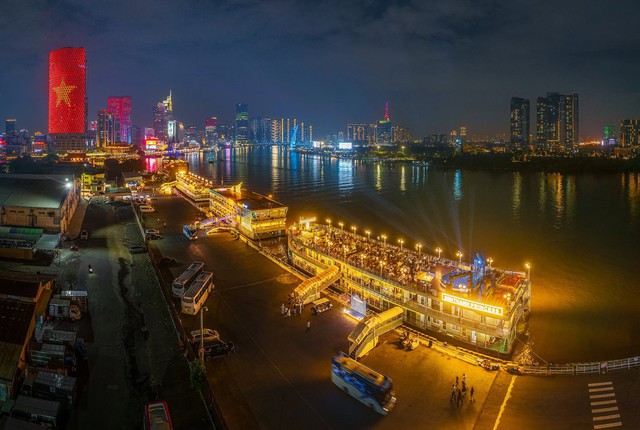
A view of Ho Chi Minh City at night, where urban spaces bring together culture, commerce, and international life. Photo: Le Anh Tuan / Tuoi Tre
Ho Chi Minh City also carries an unusual depth of history. The city occupies a prominent place in international memory of 20th-century Vietnam, particularly through war and the upheavals that once drew the world’s attention.
That historical depth gives the city the ability to tell a story that not every urban center can tell: a place once seen by much of the world through war is now increasingly experienced through peace, encounters, creativity, and cooperation.
A visitor can step out of a place preserving memories of war and return to a young, open city where flows of people, capital, ideas, and international cultures meet every day. The distance between past and present tells its own story about how far Vietnam has traveled.
Cultural diplomacy, therefore, does not take place only at official events. It exists in museums, on the streets, around dining tables, in artistic performances, on a train, in a market, and in ordinary conversations between people.
Ho Chi Minh City does not need to position itself as representing the entirety of Vietnam’s soft power. More meaningful is for it to become one of the places where the world can experience that power most naturally.
Vietnamese culture can be introduced in many places, but here people can step into a living environment where that culture is still evolving. Messages of peace can be delivered at many forums, but here people can walk through memories of war and then see a society living in peace and integration.
This vision also extends beyond the city’s administrative boundaries.
For Ho Chi Minh City, Article 40 positions the city as the core and central urban area within a special urban region and opens up space for development linkages on a regional scale.
For tourism, the implications are significant. A major center does not need to possess every resource itself; its strength lies in its ability to connect different forms of value, organize flows of people, and open up journeys extending beyond its own boundaries.
Ho Chi Minh City may not contain every color of the country, but it can become a place where many colors of Vietnam meet the world.
The Urban Development Law cannot, by itself, create a memorable city, but it can open up room for Ho Chi Minh City to create what makes it memorable.
When the status of a special urban area is translated into the capabilities of a megacity, and when development makes the city not only larger but also more convenient, more humane, richer in identity, and more connected to the world, tourism will be where those values are felt most clearly.
And if visitors leave Ho Chi Minh City carrying not only memories of a vibrant metropolis but also a deeper understanding of and goodwill toward a modern Vietnam — one with rich cultural depth, respect for history, and a commitment to peace — then the city’s appeal will have reached far beyond itself.
At that point, the “launchpad” will not only generate momentum for growth but also help spread Vietnam’s image and soft power through the most persuasive channel of all: people’s own experiences.
Vietnam’s Urban Development Law was passed by the National Assembly on August 24, 2026 and will take effect on October 1.
The 66-article law establishes a new framework for the development of special-class cities, other cities, and special economic zones.
It gives Ho Chi Minh City greater autonomy to mobilize resources, pilot new development models, and pursue policies in areas ranging from transport and land use to commerce, culture, tourism, and the marine economy.








Max: 1500 characters
There are no comments yet. Be the first to comment.