


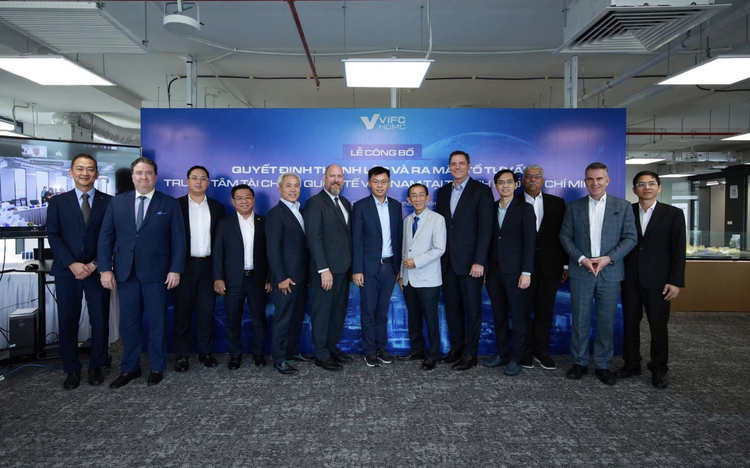
Marc Knapper, a member of the advisory group of the Vietnam International Financial Center in Ho Chi Minh City. Photo: VIFC-HCMC
Knapper, now a member of the advisory group of the Vietnam International Financial Center in Ho Chi Minh City (VIFC-HCMC), spoke to Tuoi Tre (Youth) online newspaper about how U.S. expertise and capital could contribute to Vietnam’s financial center ambitions.
US strengths that could benefit VIFC
“I joined the advisory council in July and have been very impressed with the quality of the people involved in the IFC, both on the Vietnamese leadership side and among the foreign members,” Knapper said.
He said he was optimistic about Vietnam’s international financial centers, adding that the country was building the right foundations in the right sequence.
In less than a year, Vietnam adopted a National Assembly resolution, issued implementing regulations, established a steering committee and launched the two financial centers in Ho Chi Minh City and Da Nang.
Knapper said the division of roles between the two centers was smart.
Ho Chi Minh City is focusing on banking, capital markets and aviation finance, while Da Nang is targeting newer financial instruments and fields such as fintech, green finance, digital assets and tokenization.
The question, he said, is what U.S. companies and capital can contribute to Vietnam’s international financial centers.
American companies are among the world’s leading players in capital management, capital markets, asset management and project finance.
“We have very long and deep experience in areas such as dispute resolution, arbitration and specialized courts,” he said.
U.S. companies also have internationally recognized practices in risk management and compliance.
The U.S. also has law firms, accounting firms and consulting companies with extensive expertise in turning legal or regulatory frameworks such as those of an IFC into an environment that can attract investment.
Knapper said Vietnam would need very large amounts of long-term capital to meet its infrastructure and energy development needs in the coming years.
VIFC could serve as a platform connecting investment-ready Vietnamese projects with major U.S. funds, asset managers, banks and financial companies, he said, not only to raise capital but also to bring expertise in transaction structuring, risk allocation and project finance to Vietnam.
The U.S. also has one of the world's deepest capital markets, as well as extensive experience in technology and project finance.
Knapper pointed to companies such as Meta and Google as examples of businesses that began on a relatively small scale and grew into global corporations with the support of U.S. capital markets, project finance and venture capital.
“These are areas where U.S. expertise can contribute, whether in regulation, law or accounting,” he said.
The U.S. could play a particular role in fields ranging from green finance and infrastructure finance to fintech, risk management and fundraising, as well as helping ensure that capital can flow into Vietnam.
“The U.S. and Vietnam are currently in a favorable position to cooperate,” Knapper said, noting that the two countries have significant trade agreements and that there could be further developments during Vietnamese Party General Secretary and State President To Lam’s trip to New York.
“But really, the issue is investment, including investment in the capital markets. I think American companies and American capital are very well positioned to help Vietnam achieve its goals,” he said.
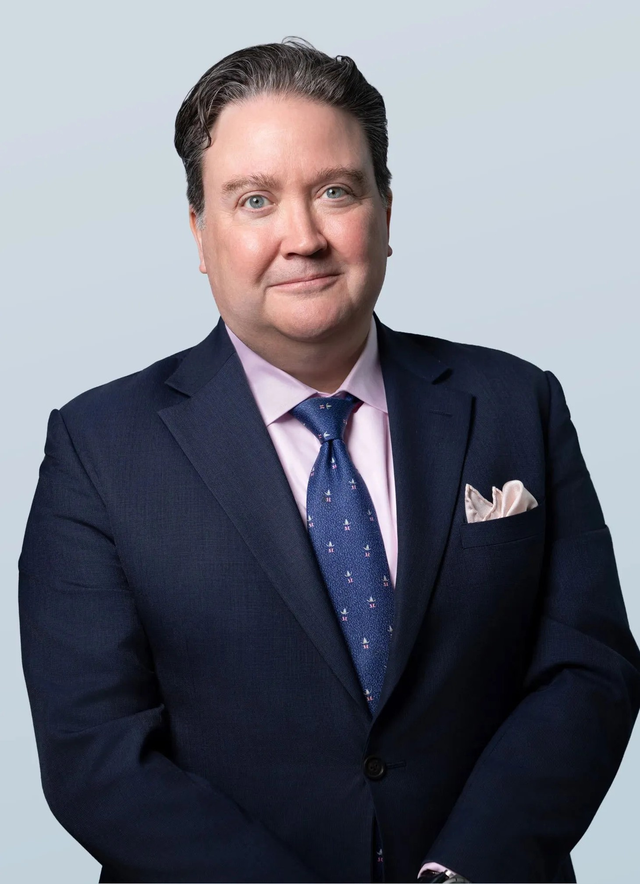
Former U.S. Ambassador to Vietnam Marc Knapper, now a member of the advisory group of the Vietnam International Financial Center in Ho Chi Minh City. Photo: Supplied
US financial institutions could open offices in Vietnam
Knapper said he expected Vietnam to become a major story for investors, venture capital funds and others in the coming months and years.
“I also very much hope that U.S. financial institutions can open offices at Vietnam’s international financial centers,” he said.
He noted that every company has a board of directors and shareholders to whom it is accountable, so companies cannot simply act as they please.
Investors would be looking for predictability, as they do anywhere when deciding whether to invest, he said.
“They want predictable regulations and policies. They want predictable court operations. They want consistency, transparency and predictability,” he said.
Human resources would also be important. Vietnam needs people working in finance, and demand for such workers will grow as the international financial centers develop.
The country needs a workforce capable of working at banks, investment firms, asset management companies and family offices — types of financial institutions common in New York, Hong Kong and Singapore.
Vietnam needs to develop its own talent pool and ensure that young Vietnamese are prepared for the sector, Knapper said.
“Just as Vietnam needs to build a workforce for the semiconductor and high-tech industries, it needs to build a workforce for finance. That will take time,” he said.
These are issues the Vietnamese government is addressing in coordination with the VIFC leadership, he said.
“But I certainly hope that many companies will decide that establishing an office or headquarters in Vietnam, whether in Ho Chi Minh City or Da Nang, depending on the case, is worthwhile and can be profitable,” Knapper said.
He added that one reason for his optimism about VIFC and Vietnam’s economic future was the Vietnamese leadership’s commitment to action in areas ranging from high technology to energy and strategic minerals.
These are all areas where the U.S. can play a role, from semiconductor manufacturing and energy, including nuclear power, to strategic minerals and rare earths.
“I believe the U.S. will be part of Vietnam’s future growth and prosperity,” he said.


Max: 1500 characters
There are no comments yet. Be the first to comment.