


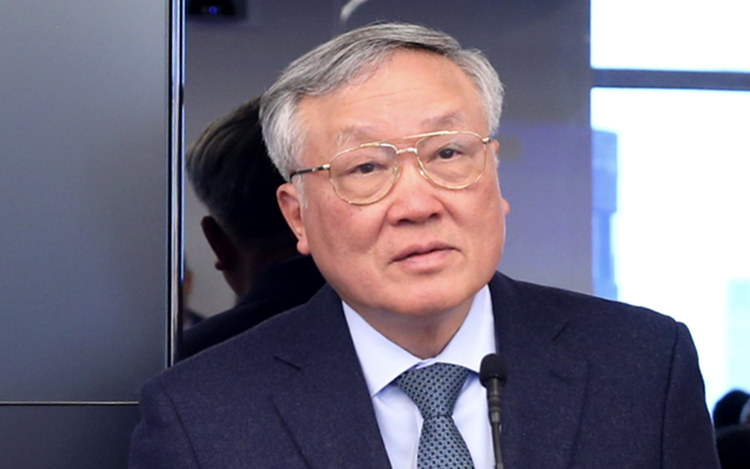
Vietnam’s Deputy Prime Minister Nguyen Hoa Binh.
The forum took place at Warburg Pincus, one of the world’s oldest and largest private equity firms, centering on capital attraction and investment promotion for Vietnam’s international financial center.
Vietnam officially announced the creation of the International Financial Center on December 21, 2025, with two locations in Ho Chi Minh City and the central city of Da Nang.
The Da Nang facility was inaugurated on January 9, while the southern metropolis opened the international financial center on February 11.
The forum came at a historic moment following Party General Secretary To Lam’s state visit to the U.S. in February, which established new strategic directions to deepen the comprehensive strategic partnership between the two nations, with a focus on economic, financial, and high-tech investment cooperation.
Despite global economic headwinds, including geopolitical tensions and supply chain disruptions, Vietnam continues to be recognized as an attractive investment destination.
With ambitions to achieve over-eight-percent economic growth, Deputy PM Binh emphasized that the country is implementing multiple strategies to reach this target.
Central to these strategies is the development of the international financial center, considered a breakthrough in institutional reforms and a key mechanism for mobilizing financial resources and high-quality talent.
The center is meant to transform Vietnam’s growth model, restructure the economy, enhance productivity, efficiency, and national competitiveness, and create new economic momentum, he stressed.
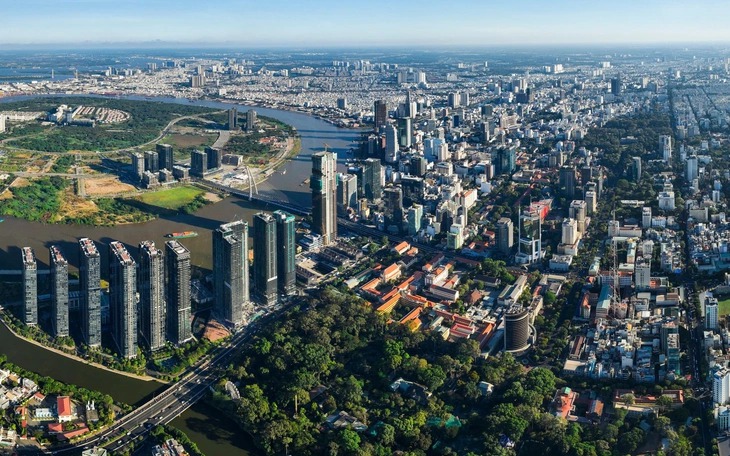
Deputy PM Binh suggested U.S. enterprises continue accompanying and cooperating with Vietnamese firms to develop the international financial center at two locations.
“U.S. investors should become pioneering investors and serve as ambassadors for Vietnam’s international financial center, helping the hub attract major potential investors, mobilize capital, and promote the development of the center across various sectors,” he said.
Key areas for development include modern financial infrastructure, high-quality talent acquisition, innovation in green finance, fintech, and digital assets, alignment with international financial standards, and enhanced oversight to ensure system safety.
Vietnam aims to maintain ongoing dialogue, provide policy recommendations, and leverage international experience to create a transparent, business-friendly, and sustainable environment within its international financial center.
Vietnam has established a comprehensive and tailored policy framework to operationalize its international center, linking it to global financial networks.
In addition, specialized legislation such as the Law on Specialized Courts at the financial center has been passed.
For the first time, Vietnam has set up a dedicated court and an international arbitration council applying common law, inviting foreign judges and arbitrators, mirroring practices in other global financial centers.
The government has also rapidly issued eight decrees guiding activities within the center across finance, banking, foreign exchange, real estate, environment, immigration, residency, commodity exchanges, dispute resolution, and other sectors.








Max: 1500 characters
There are no comments yet. Be the first to comment.