


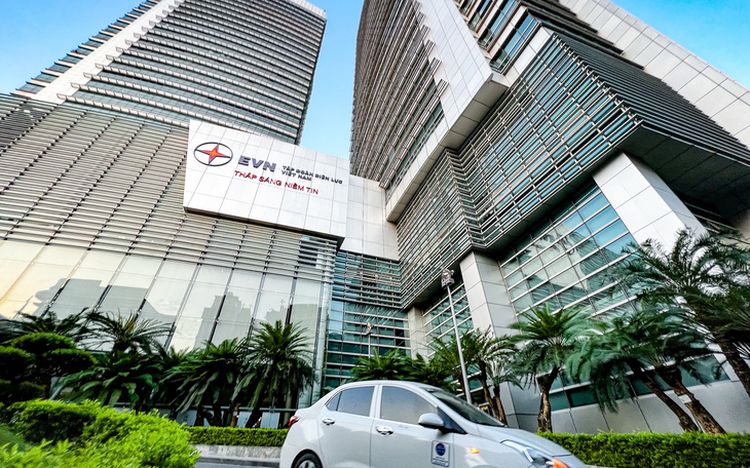
The headquarters of Vietnam Electricity Group. Photo: N. Tran / Tuoi Tre
EVN has reported to the Ministry of Finance on its registration to join the world’s 500 largest companies.
The move follows Vietnam’s Politburo Resolution 79, which sets a goal for Vietnam to have 50 state-owned enterprises among Southeast Asia's 500 largest companies and one to three state-owned enterprises in the global top 500 by 2030.
To qualify for the global top 500, annual revenue needs to exceed roughly US$32 billion.
EVN's consolidated revenue was about $24.6 billion in 2025, while its parent company posted $20.75 billion.
The group currently has consolidated assets of around $28 billion and equity of approximately $9.4 billion.
EVN is a wholly state-owned enterprise and is tasked with ensuring a stable and reliable power supply for the country's socioeconomic development.
Electricity demand is projected to grow 10-12 percent annually during 2026-39 as Vietnam pursues its goal of maintaining double-digit economic growth.
EVN currently operates a power system that ranks second in Southeast Asia and 22nd globally, with a total installed capacity of 87,600 megawatts.
The system's key technical and economic indicators rank among the top four in ASEAN.
Based on its 2025 consolidated revenue and projected growth over the next five years, EVN believes it has a basis for pursuing a place among the world's 500 largest companies by 2030.
EVN returns to profit
EVN's business performance has improved as the group continues to ensure a safe and stable power supply for economic activity and household consumption.
Total electricity generation and imports reached 171.54 billion kilowatt-hours in January-June, up 9.85 percent year on year.
The group's revenue in the first half of 2026 was estimated at VND352.787 trillion ($13.5 billion), up 14.3 percent from the same period last year.
Revenue at the parent company was estimated at VND295.893 trillion ($11.3 billion), up 13.6 percent.
Although EVN did not disclose a specific profit figure, it said its business operations were profitable.
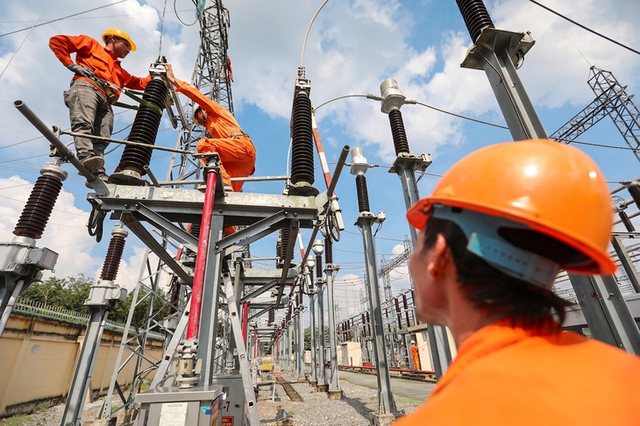
Vietnam Electricity Group has registered for inclusion among the world's 500 largest companies.
In its audited consolidated financial statements for 2025, EVN reported gross profit of VND96.351 trillion ($3.7 billion), up more than 94 percent year on year, while net profit reached VND51.881 trillion ($2 billion), 6.3 times the previous year's figure.
The elimination of the group's accumulated losses marks a significant improvement in EVN's financial position after years of losses, helping it balance its finances and preserve state capital.
During a recent meeting with Fitch Ratings, one of the world's three major credit rating agencies, EVN said its business performance had improved and that it had returned to profitability in 2024.
The group now has commercial electricity output among the largest in Southeast Asia.
Financial, restructuring challenges
With its business performance improving in the first half of the year, EVN aims to implement measures to maintain an annual operating profit margin of at least 3 percent.
To support its ambition to join the global top 500, EVN is developing a restructuring plan aligned with a competitive electricity market. The government has also asked the group to complete the plan in the third quarter.
However, EVN faces major challenges in maintaining sustainable financial balance amid rising input costs and the need to adjust electricity prices in a timely manner to reflect those costs.
The adoption of standards set by the OECD (Organisation for Economic Co-operation and Development) will also put pressure on EVN to improve transparency, corporate governance and operational efficiency.
The group must also secure enormous amounts of capital for power generation and grid projects.
Under EVN's 2025-30 development plan, it expects to allocate around $5 billion annually for investment, meaning it could need about $25 billion over the next five years.
The planned investment will fund major projects, including the Ninh Thuan 1 nuclear power project and offshore wind projects, creating additional financial pressure for the group.
Restructuring EVN to meet future growth needs and operate effectively in a competitive electricity market will also require the group to streamline its organizational structure and reorganize its existing resources.
EVN will need to determine its key roles in power generation, transmission, and distribution and develop an operating model that makes the most of its advantages and resources while ensuring both reliable power supplies and long-term financial stability.
- REFERENCE MORE









Max: 1500 characters
There are no comments yet. Be the first to comment.