



By 2045, Vietnam aims to proactively secure its talent resources and rank among the world’s top 20 countries in the global talent competitiveness index. Photo: Tuoi Tre
By 2045, Vietnam aims to proactively secure its talent resources and rank among the world’s top 20 countries in the index, according to Conclusion No. 105 on talent attraction and retention, presented by secretary of the Party Central Committee and Deputy Prime Minister Pham Thi Thanh Tra on Friday.
According to the 2025 index, Vietnam ranked 76th out of 135 economies and came fifth among ASEAN countries.
Singapore led in first place, followed by Brunei at 43rd, Malaysia at 46th, and the Philippines at 75th.
Vietnam ranked ahead of Thailand (77th), Indonesia (80th), Laos (106th), and Cambodia (115th).
Vietnam’s performance across the index’s sub-indicators revealed both progress and persistent challenges.
The country ranked 71st in enabling talent development, 76th in attracting talent, 67th in developing talent, and 79th in retaining talent.
These results highlighted Vietnam’s considerable gap with more developed economies and underscored the need for decisive action to improve its capacity to attract, develop and make effective use of talent.
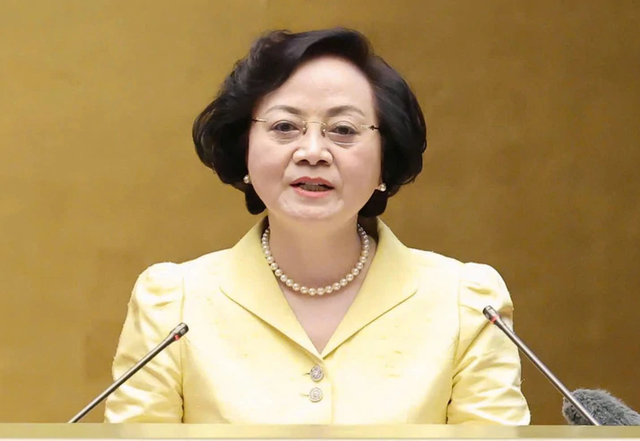
Secretary of the Party Central Committee and Deputy Prime Minister Pham Thi Thanh Tra. Photo: Gia Han
Talent as strategic national resource
As strategic competition intensifies worldwide, an increasing number of countries are treating talent attraction and development as key drivers of scientific and technological advancement and innovation.
The United States, China, European countries, Canada, Australia, and South Korea, among others, have stepped up efforts to attract highly skilled professionals through competitive policies and exceptional incentives.
Against this backdrop, Vietnam has identified talent as a particularly important strategic national resource capable of driving scientific and technological development, promoting innovation, strengthening national competitiveness, and enhancing strategic autonomy.
To achieve its 2030 and 2045 targets, Vietnam is urged to strengthen the Party’s leadership in talent development and build a shared understanding of, and commitment to, talent-related policies across the entire political system.

A key priority is to refine the institutional framework, mechanisms, and policies governing talent attraction and development, while directing resources toward strategic and high-priority industries.
Specific measures include improving salary, taxation, housing, immigration, and social welfare policies for talented individuals and their family members.
They would help make Vietnam a more attractive destination for highly skilled professionals, including overseas Vietnamese and international experts.
The conclusion also calls for allocating some 0.1 percent of gross domestic product annually from the state budget to talent-related initiatives.
Besides, Vietnam needs to reform how talent is identified, selected, utilized, and evaluated.
The conclusion stresses the importance of identifying and recommending talented individuals from diverse sources, both at home and abroad.
Vietnam should also proactively develop its national talent pool and foster a culture that values and rewards outstanding ability.
Moreover, expanding international cooperation in talent development, particularly in strategic and high-priority sectors, is another important measure.
With strong determination and concerted efforts from the entire political system, the business community, intellectuals and the public, Vietnam can work toward becoming a more attractive destination for talent, she said.
By respecting expertise, building trust and providing meaningful opportunities, the country can create conditions in which talented people are encouraged to contribute their skills and remain committed to its development.
Since 2018, more than 1,500 outstanding university graduates and young scientists have been recruited or attracted to positions in the public sector nationwide.
In the private sector, major corporations such as Viettel, Vingroup, Petrovietnam, VNPT, FPT, and Phenikaa have introduced mechanisms to attract talented professionals by offering opportunities to work on major technology projects.








Max: 1500 characters
There are no comments yet. Be the first to comment.