


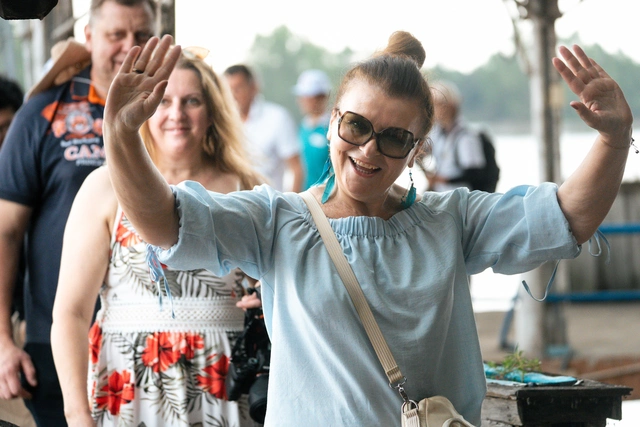
Eva, a tourist from Poland, reacts upon arriving at the Thoi Son community tourism site in Dong Thap Province, southern Vietnam, February 5, 2026. Photo: Huu Hanh / Tuoi Tre
The strategy aims to encourage longer stays and higher per-capita spending, requiring development of high-quality tourism services, investment in aviation and accommodation, and more targeted marketing, industry participants said.
New high-end offerings are emerging across key destinations.
In Ho Chi Minh City, helicopter sightseeing tours priced from VND2.9 million (US$110) to VND19 million ($721) per person provide aerial views of the city, Vung Tau's coastline and the Can Gio biosphere reserve, attracting visitors seeking distinctive experiences.
Nguyen Minh Man, deputy chief executive of Vina Group International Travel, said products combining helicopter tours and yacht services signal a shift toward premium tourism for the 2026 peak summer season.
He said some companies are considering adding golf to create multi-layered travel experiences.
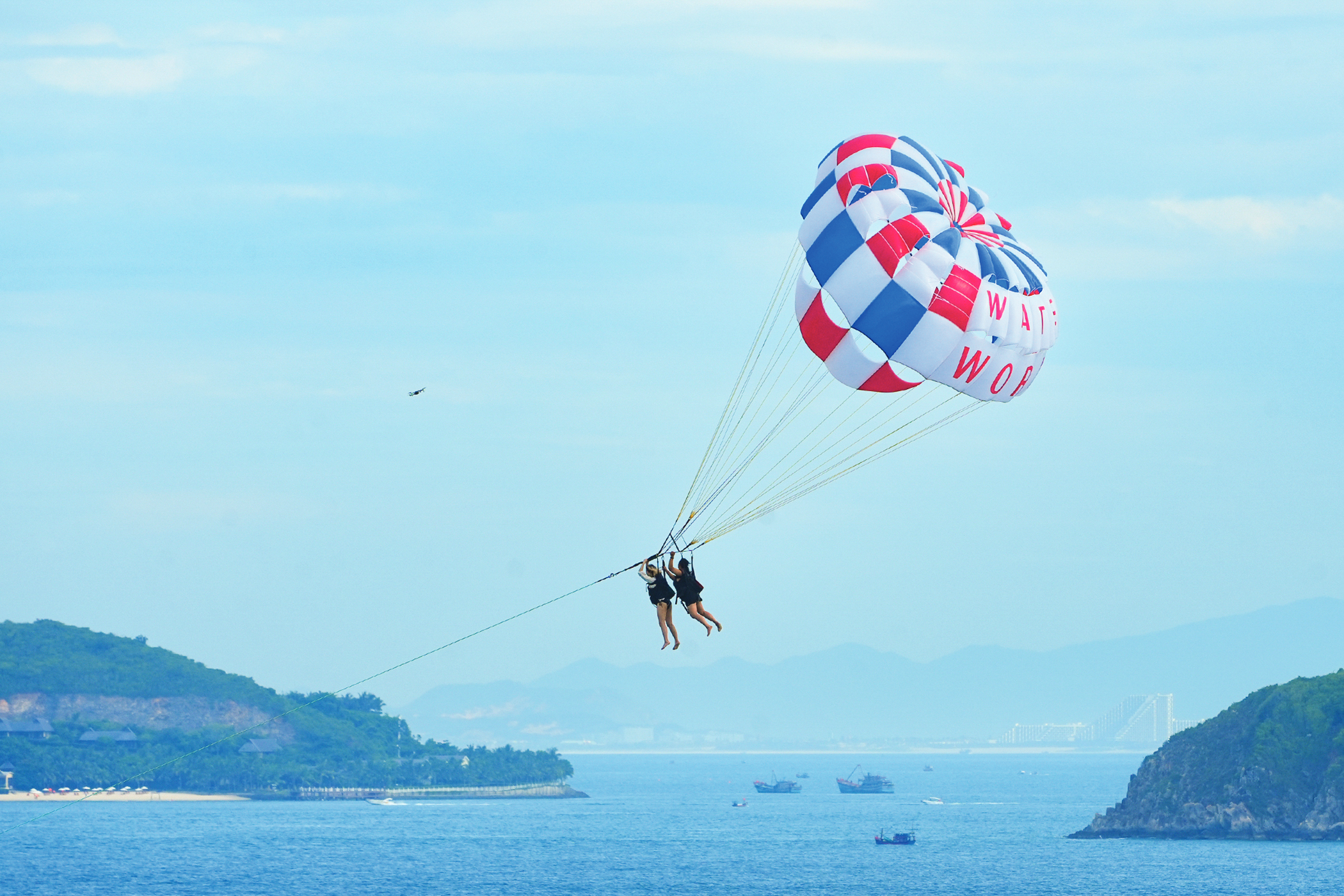
Tourists parasail over the sea in Nha Trang, Khanh Hoa Province, south-central Vietnam. Photo: Huu Hanh / Tuoi Tre
In Nha Trang, services such as scuba diving, seabed walking, private speedboat rentals and resort packages are being offered in integrated formats, each linked to spending of several million dong or more. [VND1 million = $38]
In Da Nang, tourism has expanded beyond Ba Na Hills to include dining, performance shows and river cruises, creating additional spending opportunities within a single trip.
Hanoi is targeting higher-spending segments with offerings such as fine dining, private tours and luxury accommodation, with each service contributing to higher overall visitor expenditure rather than simply increasing arrivals.
Vietnam recorded 21.5 million international visitors and 135.5 million domestic trips last year, generating more than VND1 quadrillion ($37.95 billion) in tourism revenue.
The country aims to attract 25 million foreign visitors, 150 million domestic travelers and about VND1.125 quadrillion ($42.7 billion) in revenue in 2026.
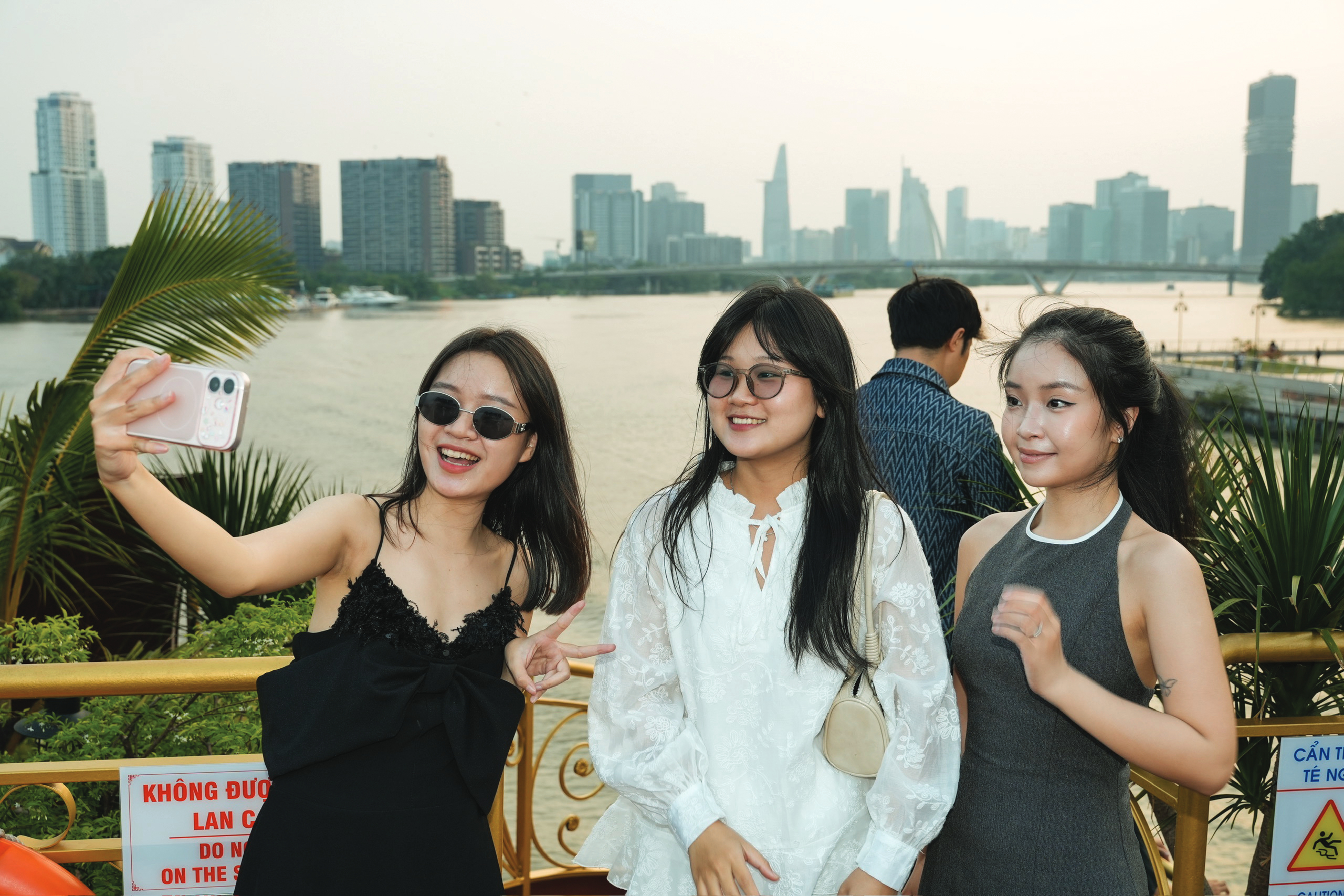
Tourists enjoy afternoon tea, sunset views and dinner aboard a cruise in Ho Chi Minh City, Vietnam, part of tourism products aimed at developing the city’s night-time economy. Photo: Huu Hanh / Tuoi Tre
A representative of Fairmont Hanoi, a luxury hotel brand under Accor, said the key challenge is designing the right products for each segment, adding that spending increases naturally when experiences are distinctive and meaningful.
Demand is expanding beyond accommodation to include high-end dining, wellness services and deeper cultural exploration, which can encourage visitors to stay longer and spend more, industry representatives said.
While Vietnam remains a cost-competitive destination for mass tourism, higher-end segments such as business travelers and long-term foreign residents show more stable and sustained spending patterns.
These visitors tend to return frequently and spend on a wide range of services, from dining and spa treatments to events and personalized experiences.
Experts said tourism performance should not be measured solely by visitor numbers, noting that destinations with high volumes but low spending generate limited retained value.
A senior executive overseeing retail development in Vietnam's airport system said the sector must move beyond simply adding more products, focusing instead on redesigning passenger experience, applying technology and better understanding consumer demand to encourage spending.
Phu Quoc International Airport is moving toward a 'destination airport' model, integrating retail, dining and services to enhance passenger experience, similar to Singapore's Changi Airport, industry sources said.
Vo Huy Cuong, deputy chief executive of Bamboo Airways, said expanding flight routes could unlock demand in destinations that have yet to attract large tourist flows.
He said aligning aviation connectivity with accommodation and tourism products could help turn under-visited locations into new growth drivers.
Experts also said attracting higher-spending visitors requires a broader ecosystem including resorts, golf courses and dining, alongside natural attractions.
Jung Jinwoo, chairman of Rakso Holdings, said some South Korean tourists have yet to discover Quy Nhon despite its comparable advantages to destinations such as Nha Trang, Phu Quoc, and Da Nang.
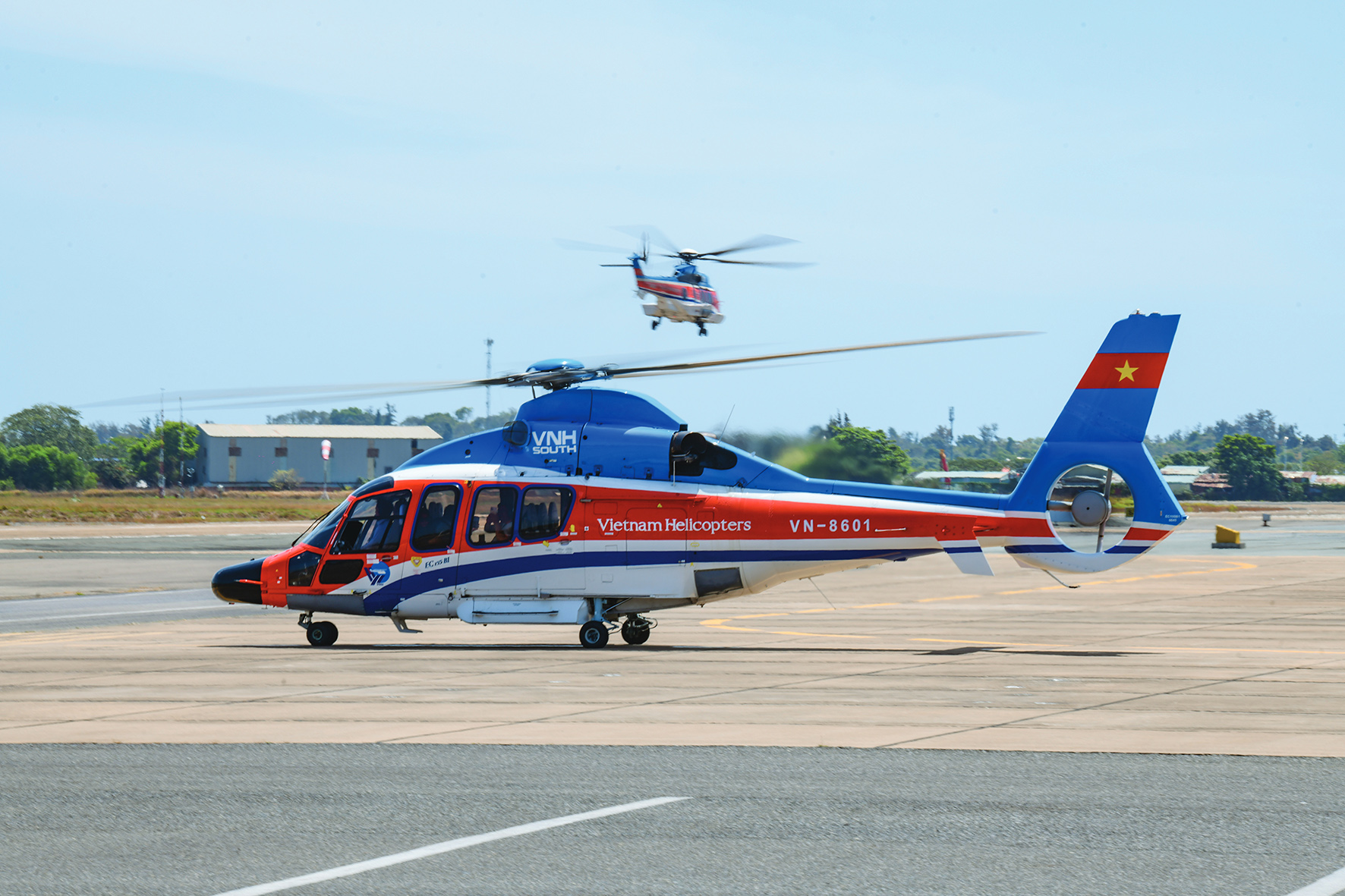
A helicopter tour over Ho Chi Minh City, Vietnam, developed to target higher-spending tourists and increase tourism revenue, is seen in this image. Photo: Quang Dinh / Tuoi Tre
Aviation expert Luong Hoai Nam said maintaining airline capacity is critical, as reduced routes and frequencies would limit seat supply, raise costs and reduce visitor flows.
He added that selecting the right source markets is key to converting arrivals into economic value.
Vietnam has expanded visa exemptions for more countries, but Nam said further steps such as specialized visas for investors, skilled workers, remote employees, retirees and short-term learners could help attract higher-value visitors.
Miquel Angel P. Martorell, founder of MQL Sustainable Tourism Services and a representative of the International Alliance of Regenerative Tourism in Vietnam, Laos and Cambodia, said Vietnam has made progress over nearly three decades, including improved environmental awareness and stronger competition among airlines and hotel operators.
However, he said repeat-visit rates remain lower than in some Southeast Asian countries and that overcrowding during peak holidays can affect visitor experience through congestion, delays and rising prices.
He also cited environmental challenges, particularly waste management, as a key concern raised by tourists, noting that ineffective recycling and disposal practices could harm the country's image if not addressed.
Martorell said Vietnam should expand cultural tourism offerings and develop more personalized experiences to avoid repetition across destinations, adding that richer storytelling and better use of local culture could encourage visitors to return.
He also called for clearer regulatory frameworks and effective tourism management mechanisms to address issues faced by visitors and improve overall service quality.
Strong international media exposure has demonstrated the impact of coordinated promotion.
A feature on Son Doong cave, the world's largest natural cave, located in Phong Nha-Ke Bang National Park in central Vietnam, by CBS's '60 Minutes' drew millions of views.
Its tour operator website traffic rose 20-fold within 24 hours following the feature, according to industry sources.
Tours to Son Doong for 2026 and 2027 are already fully booked, with reservations for 2028 increasing.
After 12 years of operation, Son Doong has generated about $25.5 million in revenue, with prices around VND70 million ($2,656) per person for a four-day, three-night expedition.
Industry participants said such cases highlight the role of combining unique experiences with effective storytelling and marketing, adding that Vietnam needs a coordinated national strategy to position its destinations more competitively in global tourism.








Max: 1500 characters
There are no comments yet. Be the first to comment.