


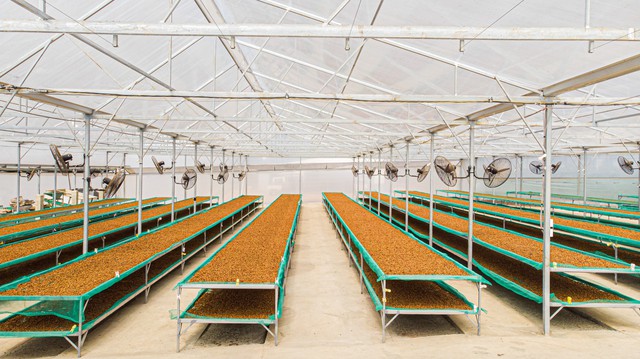
Coffee bean quality is shaped by more than just soil conditions and plant varieties. Photo: Supplied
Industry discussions often center on deep processing, promotion, and the push into premium Fine Robusta. But from my experience managing the Ea Kiet Fair Agricultural and Services Cooperative, the bigger bottleneck is more basic: inconsistent quality across farms.
It may sound like a small farm-level issue. In reality, it can make or break efforts to build a national coffee brand.
Consistency starts at farm level
A coffee brand may have eye-catching packaging and a compelling story. But if one shipment meets the standard while the next varies significantly in moisture content, defect rates, or flavor, hard-earned customer trust can quickly unravel.
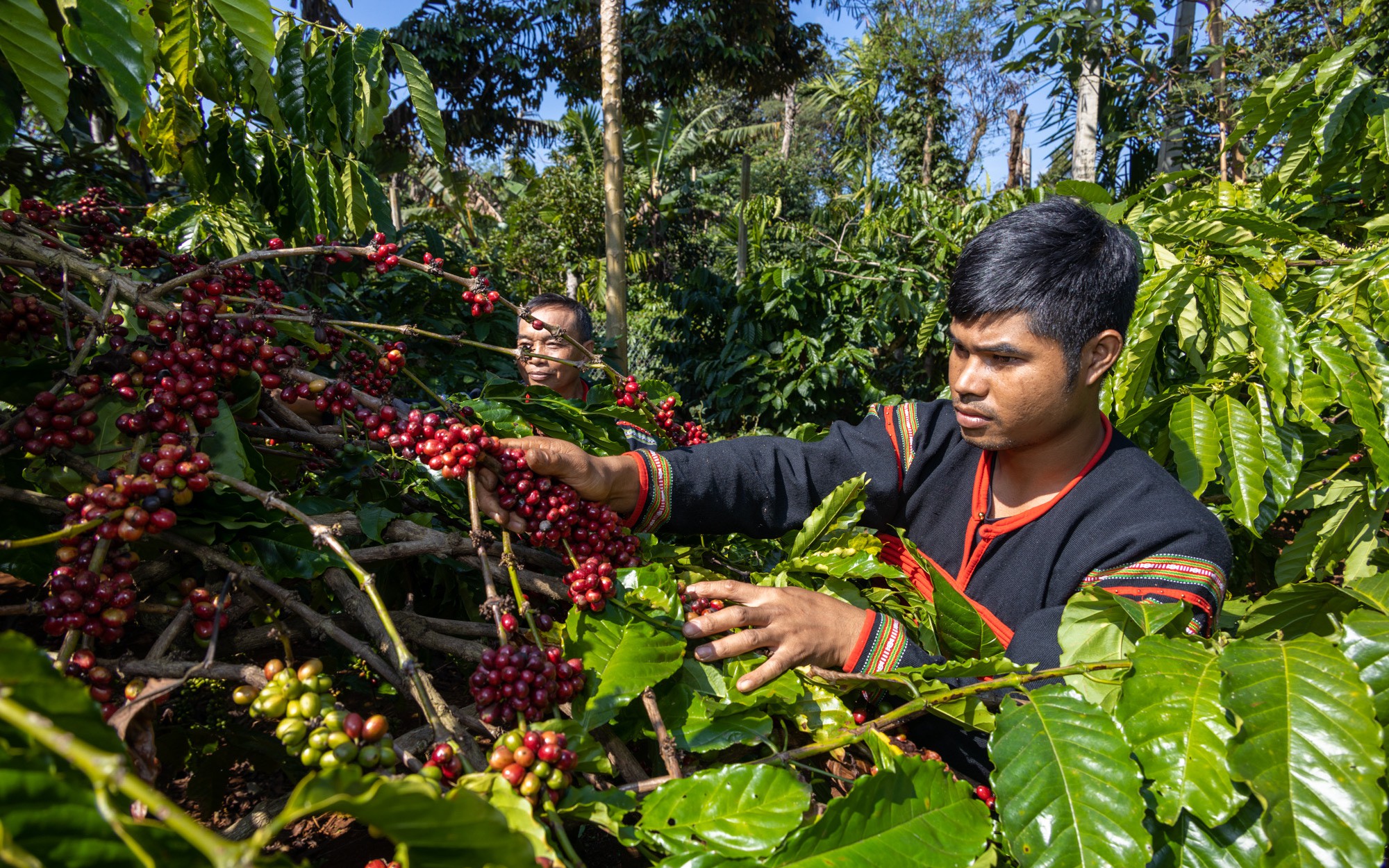

Coffee quality is shaped by the entire production chain, from cultivation practices and the proportion of ripe cherries picked to processing, drying and storage.
The challenge is that farming households differ widely in production scale, financial capacity and farming practices.
Without common standards and strong quality-control mechanisms, it is nearly impossible to aggregate coffee from hundreds of farming households into a consistently uniform supply base.
This is where cooperatives need to redefine their role. Rather than simply collecting coffee for bulk sale, they must become organizers of production and enforcers of quality standards.
This does not necessarily require expensive technology at the outset.
The first step is to establish simple, practical standards, such as requiring 85-90 percent ripe cherries at harvest, removing impurities at the farm, controlling moisture levels during drying and improving storage conditions.
Second, coffee lots should also be separated and graded by quality instead of being mixed together.
If farmers who carefully pick ripe cherries and invest more in processing receive the same price as those who harvest indiscriminately, there is little incentive to improve quality.
Third, a transparent premium system is therefore essential.
Farmers who meet higher standards should receive higher prices, giving them a clear economic reason to change production practices.
Quality must be measurable
Another weakness in Vietnamese agriculture is that “high quality” is often described in general terms rather than demonstrated with data.
That is becoming increasingly difficult as export markets impose stricter traceability and sustainability requirements, including the European Union Deforestation Regulation (EUDR).
Each coffee lot should gradually have its own technical profile, including farm coordinates, producer information, harvest date, processing method and cupping score.
Greater data transparency does more than meet exporters’ traceability requirements. More importantly, it gives cooperative managers a clear view of where problems occur in the production process and which farmers need more support with processing techniques.
Training and technical assistance can then target specific weaknesses instead of wasting resources on broad, one-size-fits-all programs.
The broader lesson is that branding cannot be separated from the stability of the raw-material base.
International buyers and professional roasters are not only buying coffee from Dak Lak or the Central Highlands.
They are buying a promise that the same origin will continue to deliver consistent quality and flavor in future harvests.
A sustainable model should therefore link companies, cooperatives and farmers more closely: companies set market standards, cooperatives organize production, and farmers follow agreed procedures.
The added value created through higher quality should then be shared fairly with growers.
Vietnamese Robusta does not need to imitate Arabica to prove its worth.
Its value will be strengthened when the industry can consistently demonstrate what makes it distinctive, and deliver that quality reliably from one crop to the next.








Max: 1500 characters
There are no comments yet. Be the first to comment.