


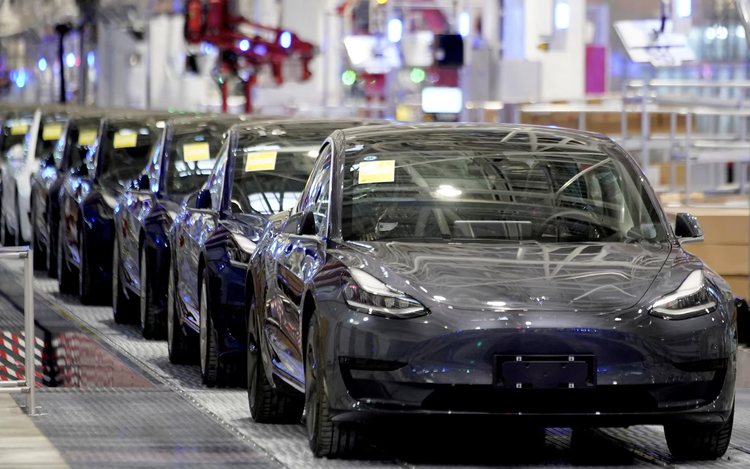
Tesla Model 3 cars are produced at a factory in China. Photo: Reuters
Electric car sales in Vietnam more than doubled in 2025, making the country the largest electric car market in Southeast Asia, according to the International Energy Agency.
Electric cars accounted for nearly 40 percent of new car sales in Vietnam, compared with around 25 percent globally.
The rapid growth in Vietnam has attracted an increasing number of international brands, with Tesla the latest to enter the market.
On September 11, Tesla established Tesla Motors Vietnam Limited Liability Company in Ho Chi Minh City with charter capital of nearly VND77.7 billion ($2.98 million).
The company is registered to engage in wholesale and retail sales of cars, spare parts, machinery and equipment, as well as import, export and distribution activities.
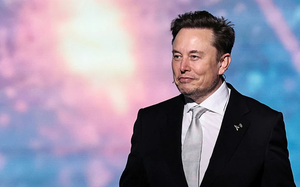
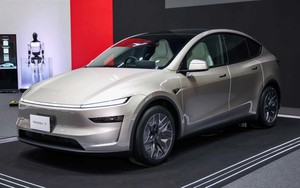
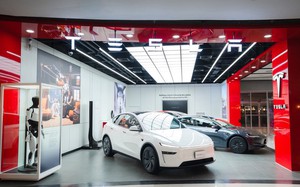
The establishment of the legal entity marks Tesla’s official move into the Vietnamese market, although the company has yet to announce specific plans for its operations there.
Several international automakers had already established a presence in Vietnam with different electrification strategies before Tesla’s entry.
Toyota, Honda, Suzuki, and Lexus have focused on hybrid vehicles, while Hyundai, Mercedes-Benz, Porsche, and several Chinese brands have introduced fully electric models.
Among the fully electric brands, BYD has attracted particular attention. The Chinese automaker began selling vehicles in Vietnam in mid-2024.
In 2025, its first full year in the market, BYD sold 3,718 vehicles, more than seven times the 485 units sold in 2024.
By February 2026, its cumulative sales in Vietnam had surpassed 5,000 vehicles.
South Korean automaker Hyundai has also introduced its Ioniq 5 in Vietnam and assembled the electric model in the country.
Hyundai Thanh Cong officially began distributing the Ioniq 5 in the Southeast Asian country in 2023 after an initial period of bringing the model into the nation to test the market.
Several other Chinese brands are also expanding their presence.
Omoda & Jaecoo sold around 3,000 vehicles in Vietnam in 2025, offering hybrid, plug-in hybrid and fully electric models.
Omoda & Jaecoo has formed a joint venture with a Vietnamese partner to build a plant in Hung Yen Province, northern Vietnam, while Geely also plans to manufacture and assemble vehicles in Vietnam.
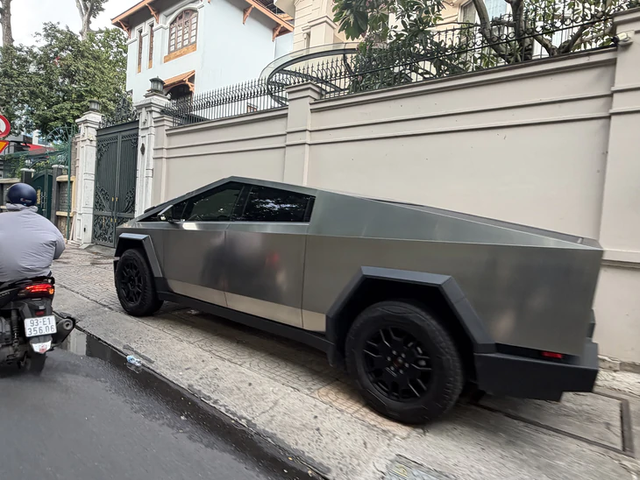
A Tesla Cybertruck on a street in Ho Chi Minh City. Photo: Nghi Vu / Tuoi Tre
Vietnam offers strong EV growth potential
Vietnam’s appeal to automakers is driven primarily by the rapid growth in demand for electric vehicles.
Vietnam’s EV market is forecast to grow at a compound annual growth rate of 18.95 percent from 2026 to 2031, expanding to $8.84 billion in 2031 from $3.71 billion in 2026, with domestic automaker VinFast currently leading the market, according to Mordor Intelligence.
Mordor Intelligence said the expansion of domestic manufacturing, investment commitments from foreign automakers, government support policies, and falling battery costs are contributing to the growth of EVs in Vietnam.
VinFast currently leads Vietnam’s electric car market in sales. In 2025, the domestic automaker delivered some 175,100 electric cars, its highest annual figure to date and its second consecutive year as market leader.
The growth has continued in 2026. In January-August, VinFast delivered nearly 154,100 electric cars in Vietnam, including 20,160 in August alone.
The rapidly expanding market is creating more room for new brands to enter.
Tesla’s arrival, together with foreign automakers continuously adding new models, expanding dealerships and investing in local production, signals a more diverse and competitive phase for Vietnam’s EV market.
Beyond brand recognition, international automakers can compete through technology, design, performance, and sales strategies.
For consumers, the growing number of brands will bring more choices while encouraging automakers to improve their products, pricing and services.








Max: 1500 characters
There are no comments yet. Be the first to comment.