


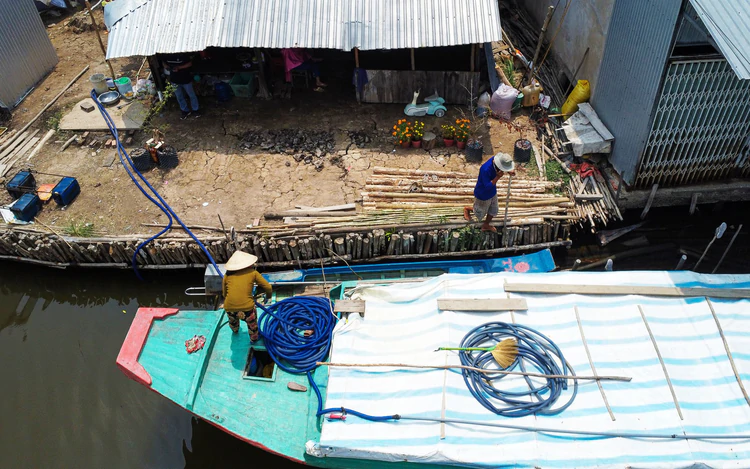
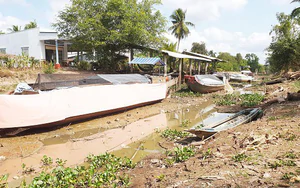
A resident handles water hoses aboard a boat moored along a canal in Ca Mau, Vietnam's southernmost province, where rural communities often face water shortages during the dry season and have to buy water brought in by boats from other areas. Photo: Thanh Huyen / Tuoi Tre
The measures are part of the province's 2026-27 drought and saltwater intrusion response plan, which prioritizes domestic water supplies amid El Nino, a climate phenomenon characterized by periodic warming of surface waters in the central and eastern equatorial Pacific Ocean that can disrupt weather patterns worldwide, including in Vietnam.
In the plan issued on Sunday, the provincial administration warned that El Nino is forecast to remain very strong from October to December 2026, with a probability of up to 98 percent, and could maintain high intensity from January to March 2027, potentially extending into early summer.
All local authorities have been instructed to review households at risk of water shortages, their storage capacity, existing water supply facilities and available transportation options.
Backup water supply points will be prepared, prioritizing policy beneficiary households, disadvantaged families and other vulnerable groups.
The province will focus on ensuring domestic water supplies in Bien Bach, Khanh Lam, Khanh An and Nguyen Phich Communes, as well as residential areas that experienced shortages in previous dry seasons.
In the event of severe shortages, water will be delivered by tankers, barges or other suitable means, with centralized supply points and temporary stations set up as needed.
Residents will also be encouraged to prepare water storage containers before the rainy season ends and use water sparingly.
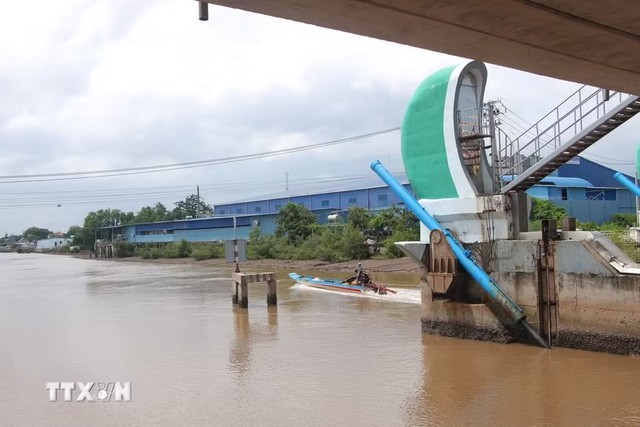
Sluice gates and dams in Ca Mau Province are operated to block saltwater and safeguard livelihoods during the dry season. Photo: VNA
Ca Mau has developed three response scenarios based on how far the boundary of water with a salinity level of four parts per thousand penetrates inland and the extent of freshwater shortages compared with the multi-year average.
Under the first scenario, likely costing VND500 million (US$19,400), the salinity boundary would extend less than 25 kilometers inland, with supplies largely meeting demand despite localized shortages at the ends of supply systems.
The second scenario involves the boundary reaching 25–50 kilometers inland and freshwater shortages of 30–50 percent, requiring more than VND38 billion ($1.47 million).
Under the third scenario, the boundary would penetrate 50–90 kilometers inland, causing shortages of more than 50 percent, with an estimated budget exceeding VND167 billion ($6.47 million).
For agricultural production, the province will prioritize protecting freshwater rice-growing areas west of Vinh Phong Canal, along National Highway 1, and in low-lying rice-shrimp farming areas without fully enclosed embankments that face a high risk of saltwater intrusion.
If irrigation water cannot be guaranteed and crops face a high risk of damage, relevant agencies will propose that competent authorities consider restricting or temporarily suspending planting.
The province will also monitor land subsidence in subregions VI and VII in northern Ca Mau and prepare personnel, equipment and water resources for forest fire prevention and firefighting in U Minh Ha and the Hon Khoai island cluster.
The provincial Department of Agriculture and Environment will closely monitor developments and advise when to activate the response scenarios.
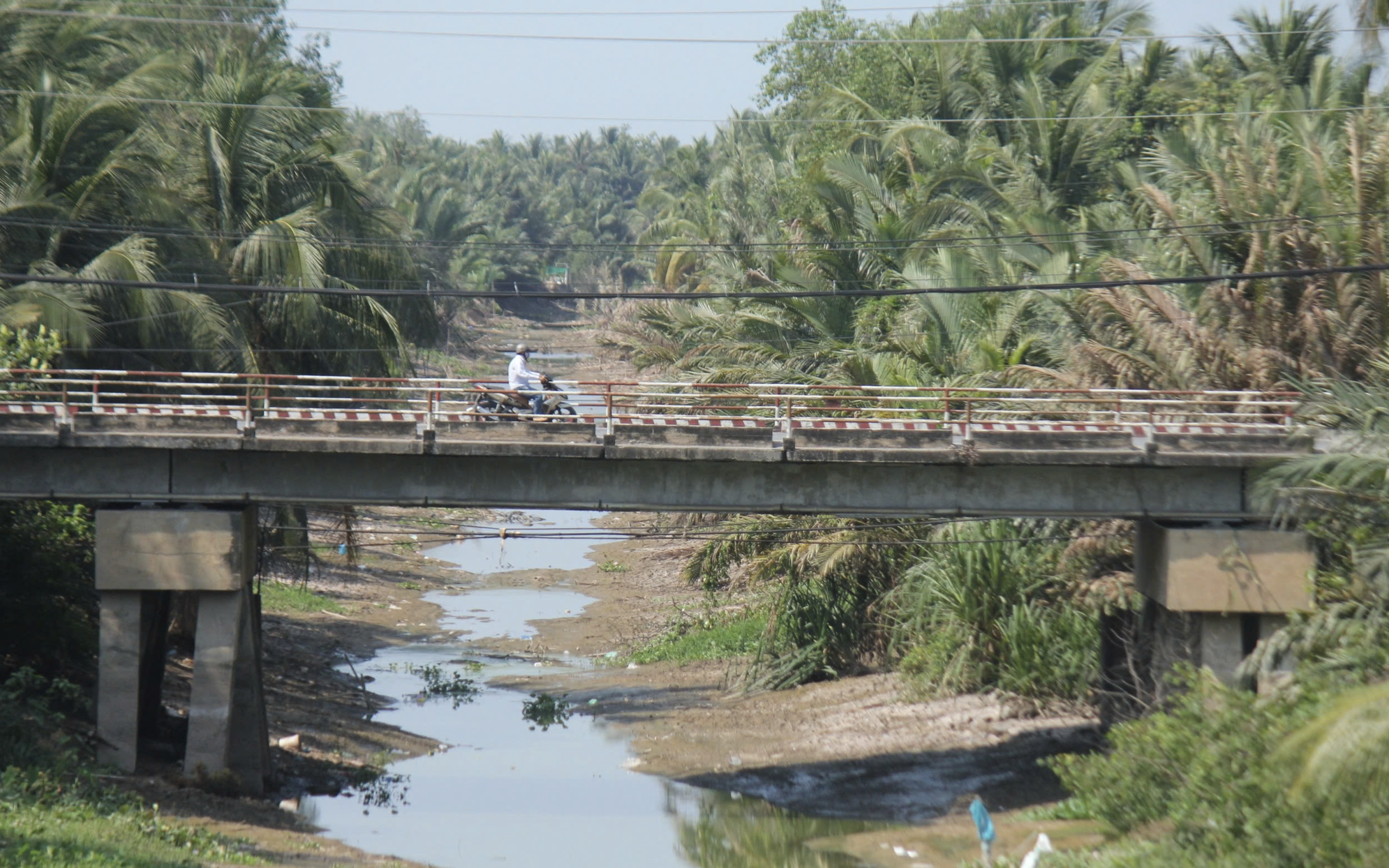
If at least one indicator exceeds its threshold or an urgent domestic water shortage occurs, authorities must propose early intervention without waiting for all conditions to be met.
Preparatory measures must also begin immediately, without waiting for an official announcement activating the response plan.
Given its low-lying terrain, dense network of rivers and canals, and heavy reliance on upstream freshwater, Ca Mau is consistently among the localities hardest hit by prolonged dry seasons and strong El Nino events, according to the Vietnam News Agency (VNA).
The province has more than 80,000 hectares of rice-shrimp farming land, making it a key production area for this agricultural model nationwide.
Close coordination among authorities at all levels, from central to commune level, is therefore needed to develop detailed response scenarios, identify areas at high risk of severe impacts and devise appropriate measures, VNA reported.



Max: 1500 characters
There are no comments yet. Be the first to comment.