


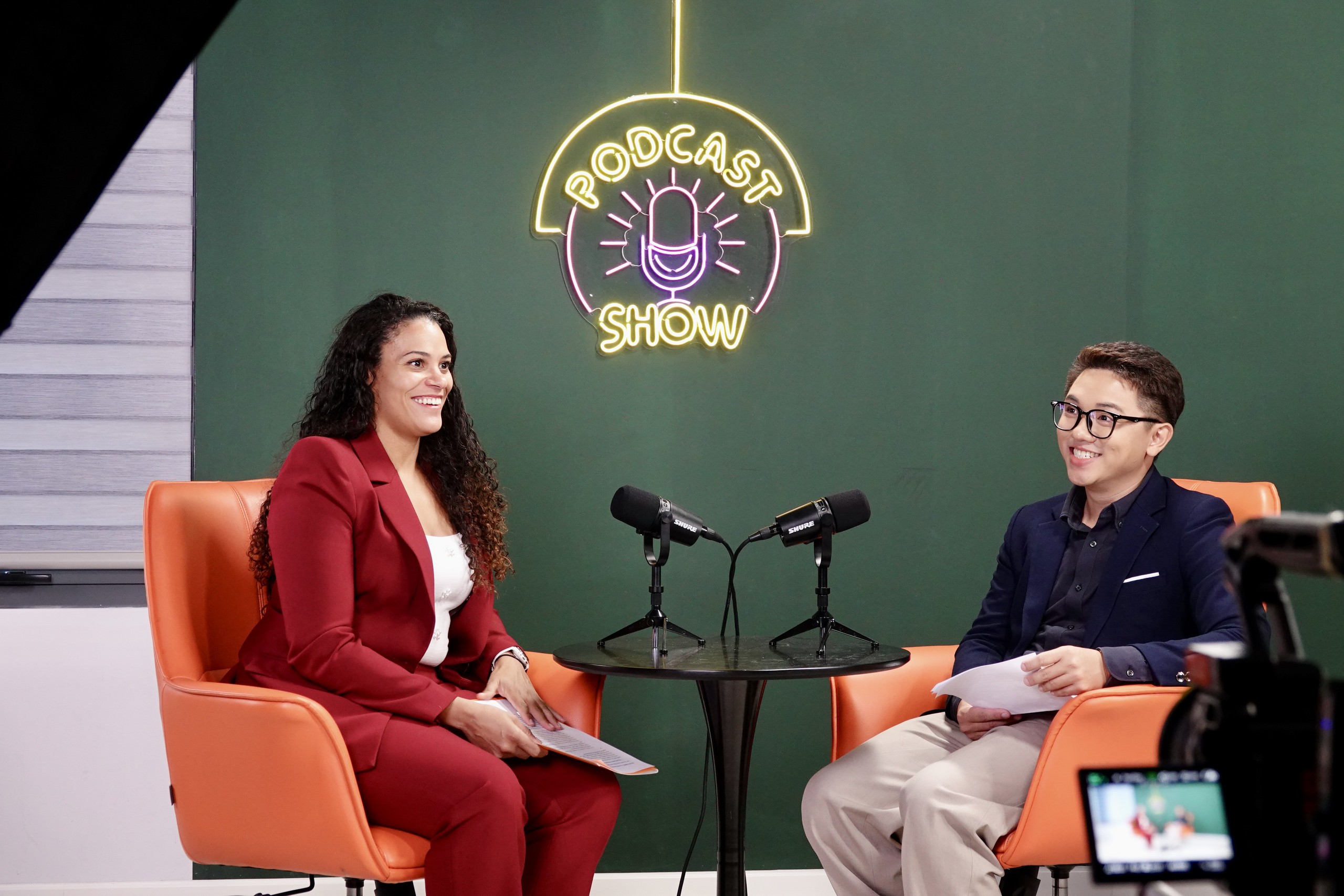
Raissa Marteaux, Consul General of the Kingdom of the Netherlands in Ho Chi Minh City, and host The Ky during the recording of The City Connect at Tuoi Tre Newspaper in Ho Chi Minh City in November 2026. Photo: T.T.D. / Tuoi Tre
To explore opportunities for cooperation, Tuoi Tre News spoke with Raissa Marteaux, Consul General of the Kingdom of the Netherlands in Ho Chi Minh City.
In the interview, which is part of the third episode of The City Connect, a dialogue series launched by Tuoi Tre News in September, the diplomat also discusses the role of young people in shaping the city's future, her experience as the first female Dutch consul general in Ho Chi Minh City, and her advice to young people to embrace failure as part of their journey.
The conversation has been lightly edited for clarity and readability.
Living with water: From Dutch expertise to a more resilient Ho Chi Minh City
The Netherlands has learned to live with water so well that they have a saying: "God created the world, but the Dutch created the Netherlands.” Meanwhile, Ho Chi Minh City is working hard to tackle flooding, land subsidence, and rising sea levels. So what can Ho Chi Minh City learn from the Dutch approach to living with water?
From ancient civilizations to modern cities, you can see that water has always played a very important role. So water is essential for our prosperity, transportation, and food production, but it is also responsible for many challenges.
And I think it's especially there that both Ho Chi Minh City and the Netherlands really find each other. This is what we have in common.
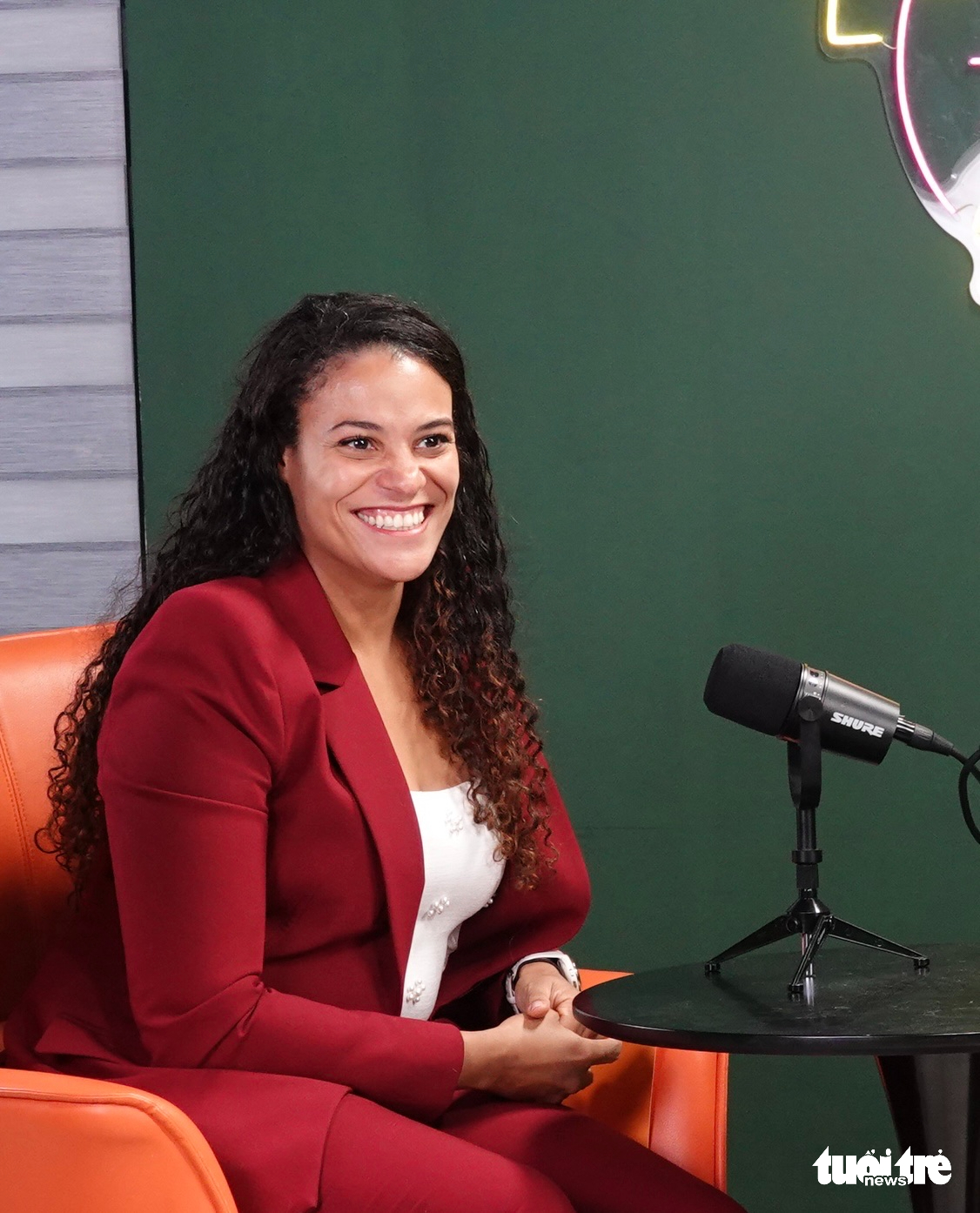
Raissa Marteaux, Consul General of the Kingdom of the Netherlands in Ho Chi Minh City. Photo: T.T.D. / Tuoi Tre
There's an old joke we often tell that says that the Dutch spent centuries fighting water only to realize after centuries that it would be better to become friends with water. And I think that is the essence of our approach to water management and something that we can share with Ho Chi Minh City.
We have gradually moved from fighting against water, fighting against the rivers, to living with the rivers.
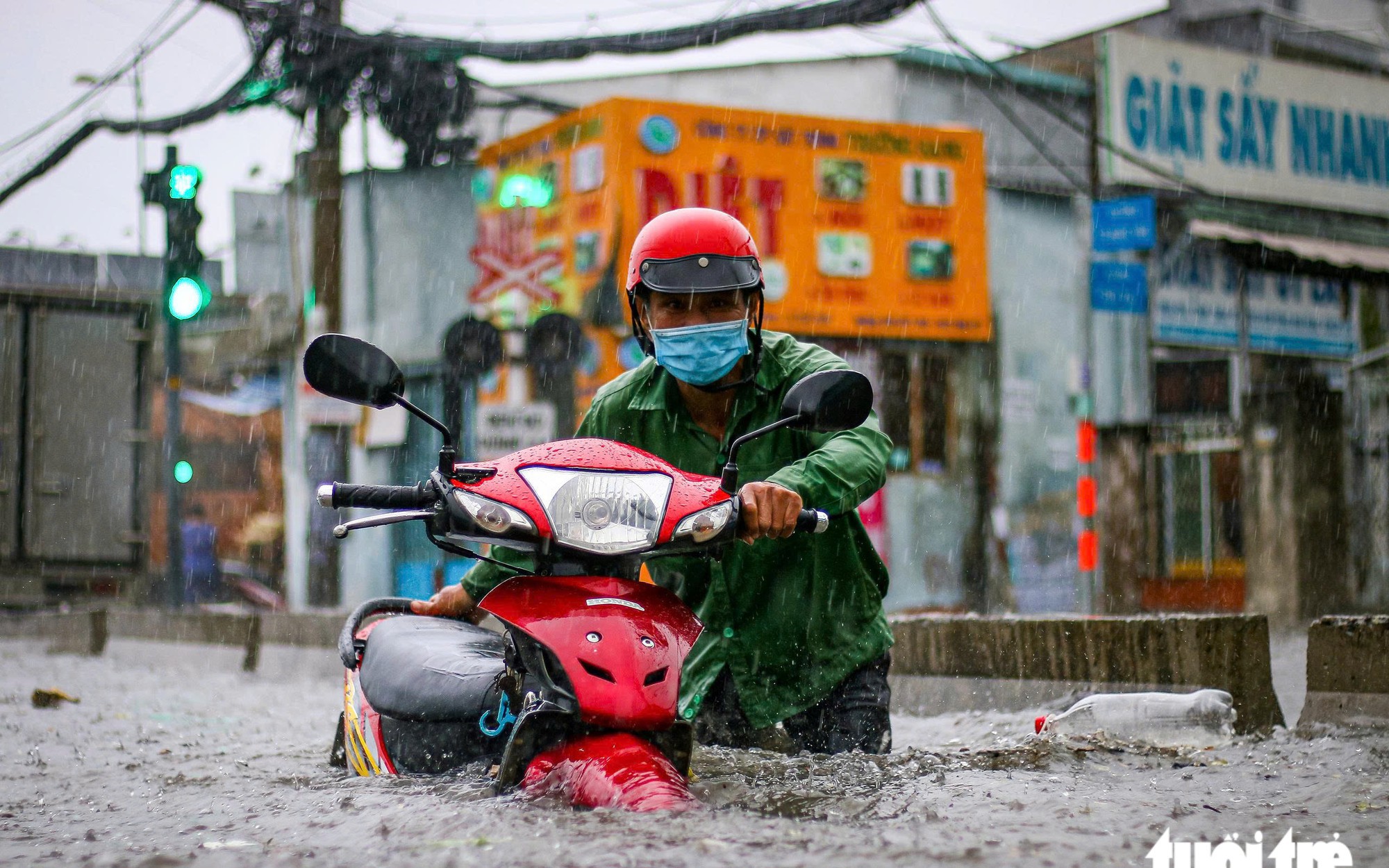
What does that mean? Practically, it means that instead of just creating physical barriers like dikes or dams, we are giving more space for the river to expand, what we call “Room for the River.”
If we would apply that to Ho Chi Minh City, that would mean that rather than just looking at drainage systems and pumps and dikes, we would also look at nature-based solutions, for example, looking at parks, green spaces, and water storage areas.
So it’s not just about flood prevention, but also to create more sustainable living.
One of the new areas that we are also looking into at the moment, which is not only being considered in Ho Chi Minh City but also in the Mekong Delta, is looking at floating infrastructure.
This is a very innovative way of thinking and building, but looking at Ho Chi Minh City and the dynamism and the innovative force here, I think this would be the ideal place to start working on that as well.
Where do you think Ho Chi Minh City and the Netherlands can work together to make the city more resilient?
A lot of this is about exchange, right? It is not just about what Ho Chi Minh City can learn from the Netherlands, but also what we can learn from Ho Chi Minh City. So it is about working together to find solutions, preferably innovative solutions.
As I mentioned, one of the things that Ho Chi Minh City can learn from the Netherlands is working on nature-based solutions and room for the river.
So what we are working on with Ho Chi Minh City at the moment is creating guidelines, for example, for urban development: how can you build in a way that prevents your streets from flooding while promoting a more sustainable way of living that manages the water?
We are also working with Ho Chi Minh City on an action plan to 2050 to see what the city should do to be able to work with water, rather than just against water.
And we are working together to share expertise and also to further build capacity among students, professors, and civil servants in the city, everyone that is involved basically in creating this ecosystem.
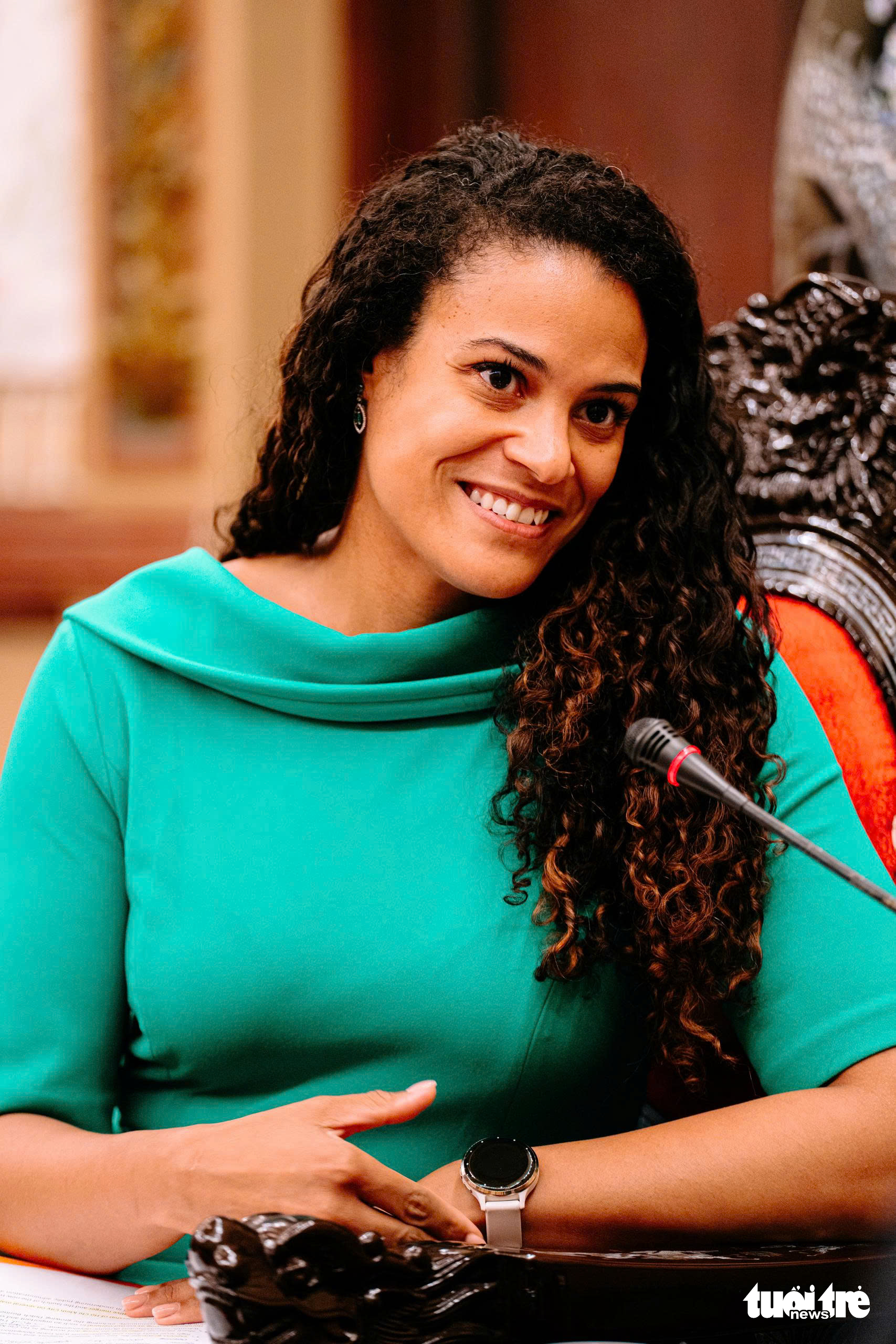
Consul General of the Kingdom of the Netherlands in Ho Chi Minh City Raissa Marteaux. Photo: Thanh Hiep / Tuoi Tre
High-tech and innovation cooperation
Ho Chi Minh City is seeking to strengthen its position as a regional hub for high-tech industries, innovation, and digital transformation. The Netherlands also has strengths in technology and innovation. Where do you see the biggest opportunities for cooperation?
This area of cooperation is relatively new, I would say, but very interesting and it has a lot of potential.
Ho Chi Minh City has made it clear to us that its other big priorities are high-tech and semiconductors. And if it's a priority for Vietnam, it is definitely a priority for us. In addition, it's a sector that we're relatively strong in.
Did you know that the Netherlands has been in the top 10 most innovative countries for the last 16 years? We've long been known for our innovation.
Looking at the semiconductor sector specifically, Dutch semiconductor equipment is used in the design, development, and manufacturing of 85 percent of all the chips worldwide. People don't realize it, but the Netherlands is really a key player in the semiconductor value chain. Without that, you would have no cars, no drones, or many other types of electric equipment.
So I think the key in this relationship is that it's a true partnership. We are complementary and I think that is the only way to move forward in developing this.
Vietnam has a very young and dynamic workforce. The country has a growing industrial base, and most importantly, it has a very strong ambition. It has a clear goal and it's working to get there.
The Netherlands, on the other hand, has world-class technology. We have research expertise, and we also have experience in building innovative ecosystems.
Our country is small, but we have several hubs that are working on innovation and innovation ecosystems in the Netherlands.
So I would say if we look at the potential areas for cooperation, we would be looking at semiconductors, high-tech, photonics, precision engineering, and advanced manufacturing. They are very interesting areas and sub-sectors to work in.
Another area where there is, of course, an opportunity is connecting Dutch businesses with Vietnamese businesses, as well as linking universities and research institutions so they can innovate together.
So how do you think cooperation between the two sides can contribute to the city's long-term development?
Well, if we look at the longer term, one of the things we should focus on is developing talent, because if we do not develop local talent, we will have to import it.
So we need to ensure that young Vietnamese have the opportunity to strengthen and develop their talent.
Another long-term priority is creating business opportunities. This means encouraging business-to-business linkages so they can grow together.
The person behind the diplomat
Diplomacy is about relationships, and getting to know a city is often the best way to understand its people. What was your first impression of Ho Chi Minh City?
It sounds a bit strange, but the moment I got off the plane it felt like coming home. The energy, the smells of the city, the noise, I just felt instantly as if I came home.
What has surprised you most since arriving?
I think I was caught a little bit off guard by the dynamism and the energy of the city. I mean, it gives a lot, but it also takes a lot. So I remember after the first couple of months, I was tired because so much was happening and I wanted to experience it all.
But the thing that surprised me really the most and that will stay with me always is the people. The way that I was welcomed here in Ho Chi Minh City was remarkable. People were so warm, so open, and so curious. I had never experienced that before.
What do you enjoy most about living here?
No day is the same. Every day will bring a new surprise. I think that's definitely one of the things that I enjoy the most.
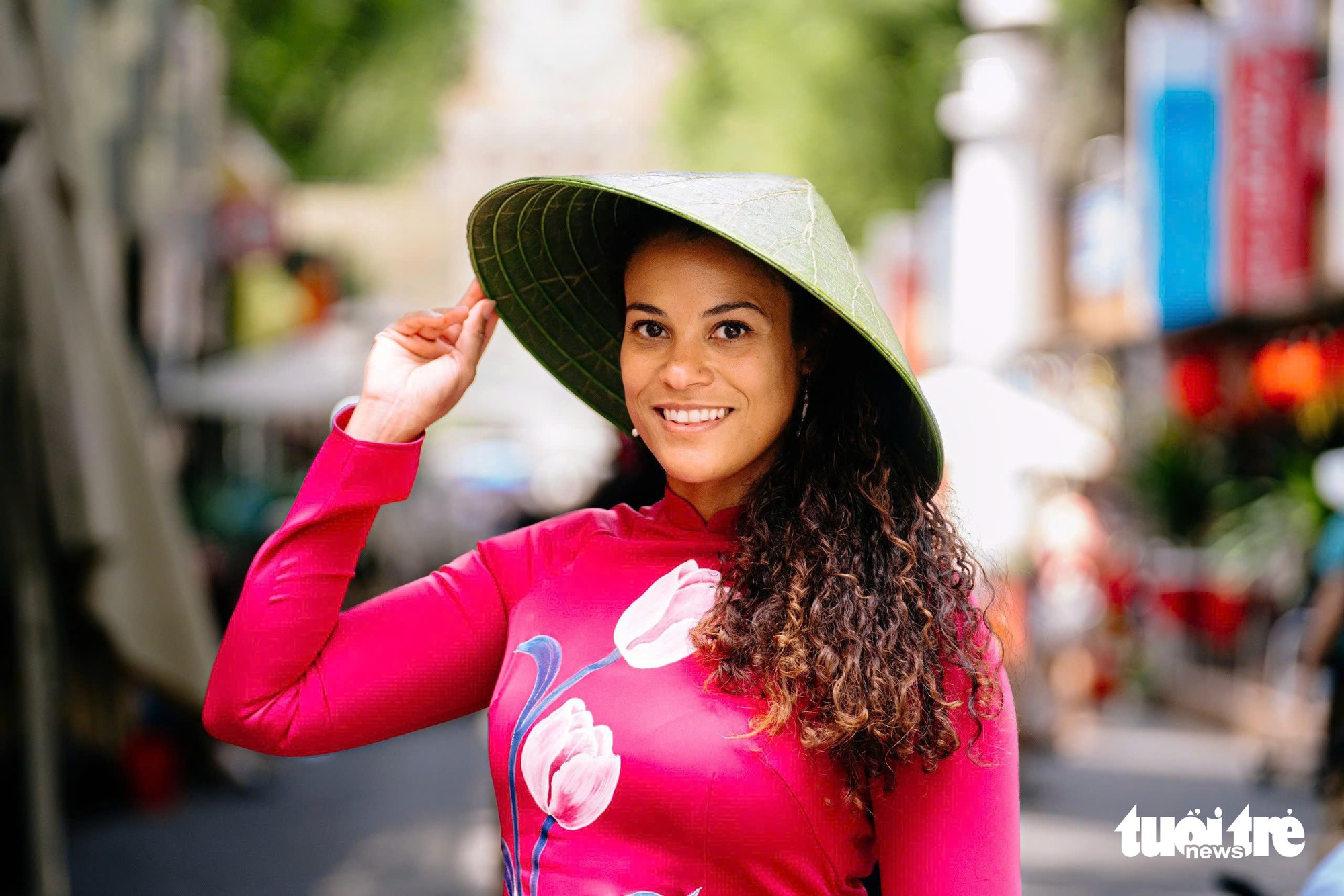
Consul General of the Kingdom of the Netherlands in Ho Chi Minh City Raissa Marteaux poses in Vietnamese traditional costume 'ao dai.' Photo: Thanh Hiep / Tuoi Tre
As the first woman to serve as Consul General of the Kingdom of the Netherlands in Ho Chi Minh City, what does this milestone mean to you personally?
Personally, it was a big step for me. Not necessarily as a woman, but definitely given my background.
I am the first person in my family to join the government and enter the Ministry of Foreign Affairs. So I had to do it all on my own, without any connections, and work hard to make my way in.
To then be rewarded with this position to be able to represent the Kingdom of the Netherlands here in Ho Chi Minh City was quite an emotional moment for me, and proof that after years of hard work, it pays off.
The Netherlands is a country that advocates gender equality, so I found it interesting that I was the first female consul general appointed to Ho Chi Minh City.
But looking especially at my own journey, role models are always so important in showing you that you can achieve your dreams, and there is a way to achieve it. It was strange, but also very humbling to now be in that position where I am suddenly a role model and other people, especially other young women, are looking at me rather than me just looking at others.
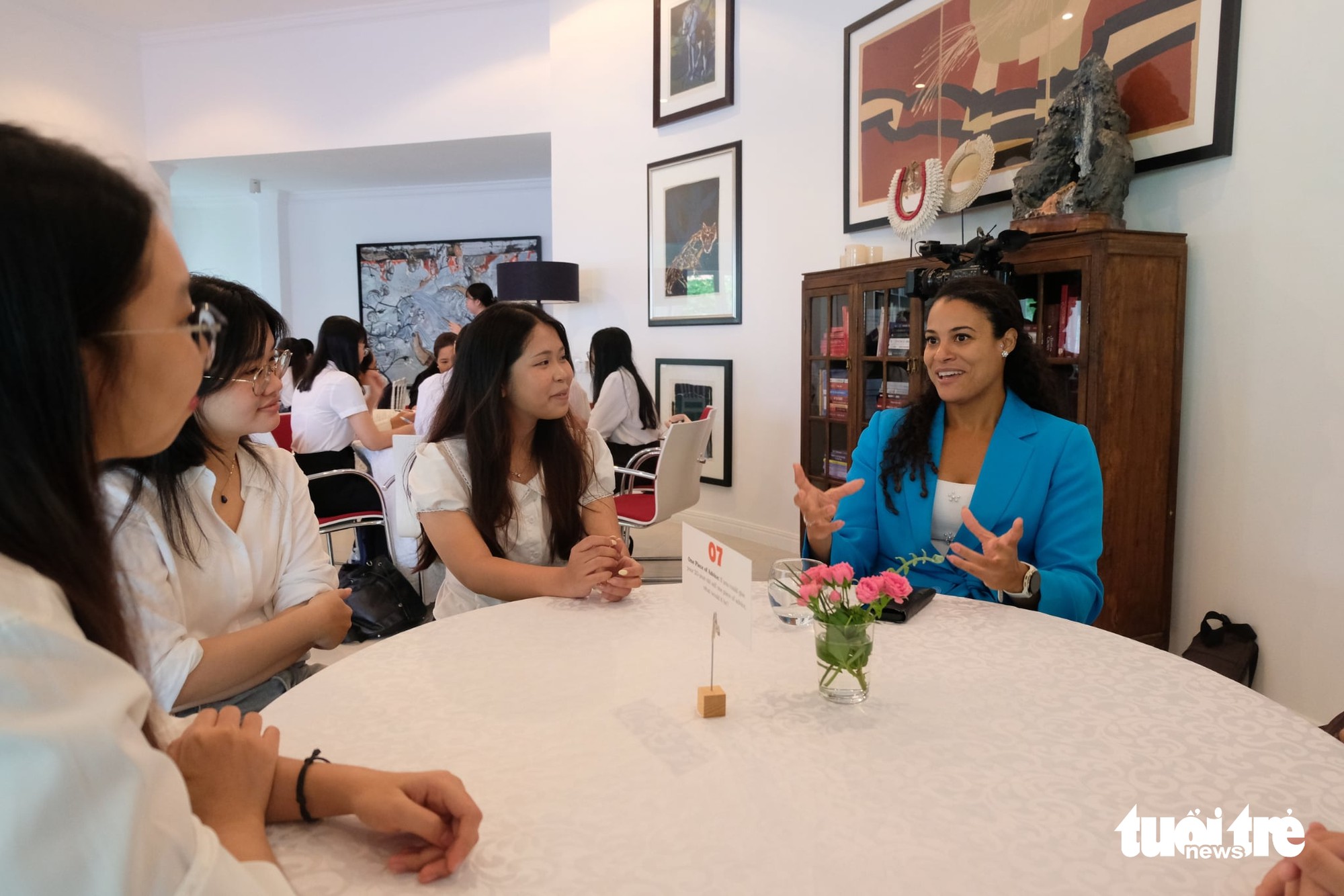
Dutch Consul General in Ho Chi Minh City Raïssa Marteaux speaks with students during a gathering marking International Day of Women in Diplomacy in Ho Chi Minh City, June 24, 2026. Photo: Tran Phuong / Tuoi Tre
You've talked about the rewarding aspects of the experience. What about the challenges?
The challenging part? (laughs) Well, as I said, it's a very energetic city, and a lot is happening. You want to experience it all!
I'm someone who gets FOMO very easily, so pacing myself and maintaining a work-life balance are definitely challenging.
From what you've shared, we understand that your mission here is to foster cooperation and create opportunities. Speaking of opportunities, when we talk about the future of Ho Chi Minh City, we think it's not defined solely by flood management technologies or, especially at this moment, artificial intelligence. People matter just as much, particularly young people, right?
Correct.
So, what do you think of the younger generation here in Ho Chi Minh City?
I love interacting with young people – from the ages of five and older, basically, up to university – here in Ho Chi Minh City.
I love it because they are so open and unguarded in sharing their thoughts. Just in interacting, you learn a lot from them, a lot of ideas that come out. You learn what really matters to the youth, what really bothers them, and what moves them.
And it is amazing to be able to talk with those young changemakers because they are the future of the country, and to see just how promising that future is.
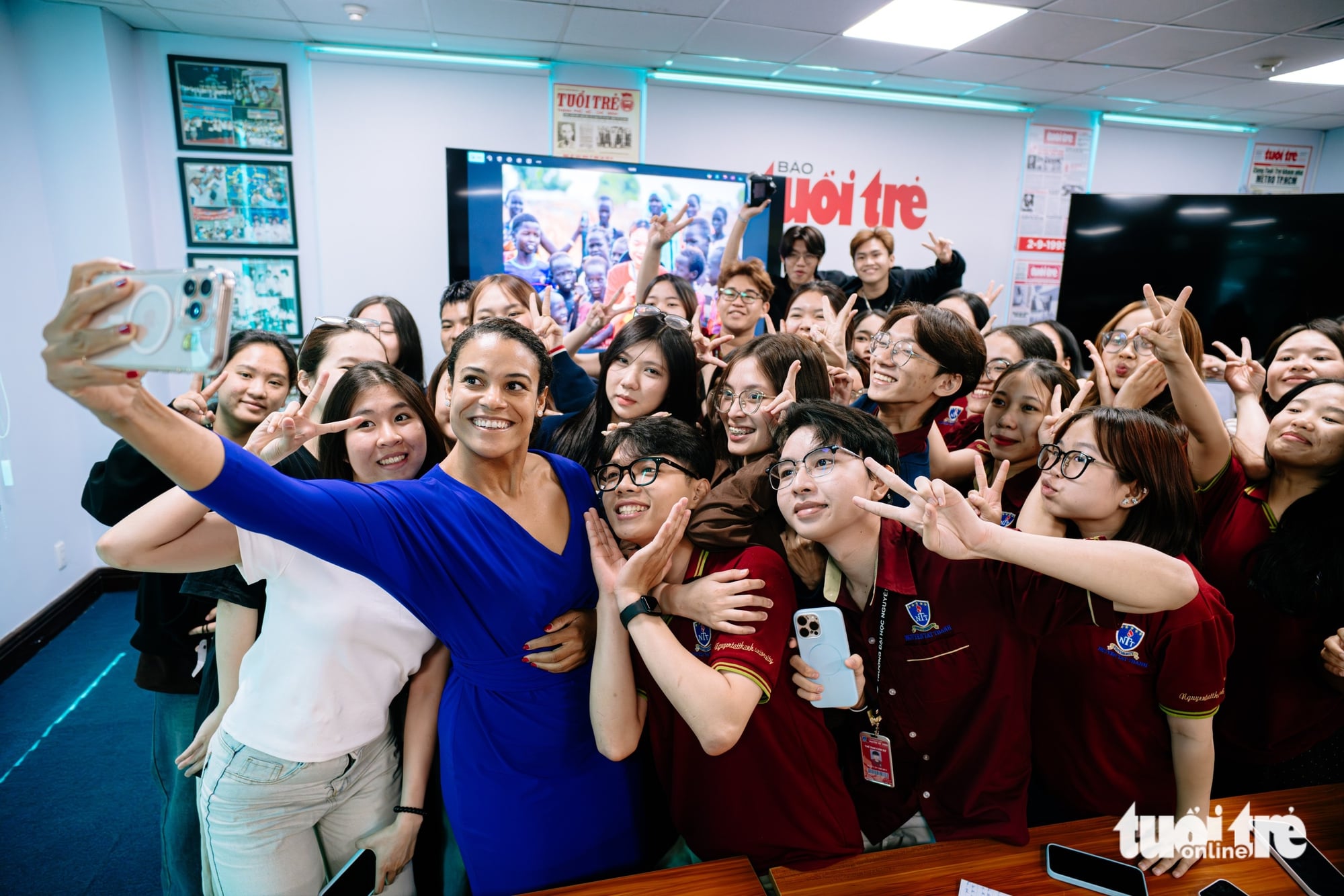
Dutch Consul General in Ho Chi Minh City Raissa Marteaux takes a wefie with students from Van Lang University and Nguyen Tat Thanh University during her visit to Tuoi Tre Newspaper in March 2026. Photo: Thanh Hiep / Tuoi Tre
Is there any experience or lesson from the Kingdom of the Netherlands that the city can learn from? How has the country empowered a young generation?
Giving them space to try, giving them space to question, to dare, to innovate.
Innovation means thinking outside the box. So rather than telling young people that their ideas are crazy, silly or impossible, we should try and help them every way we possibly can to make it happen.
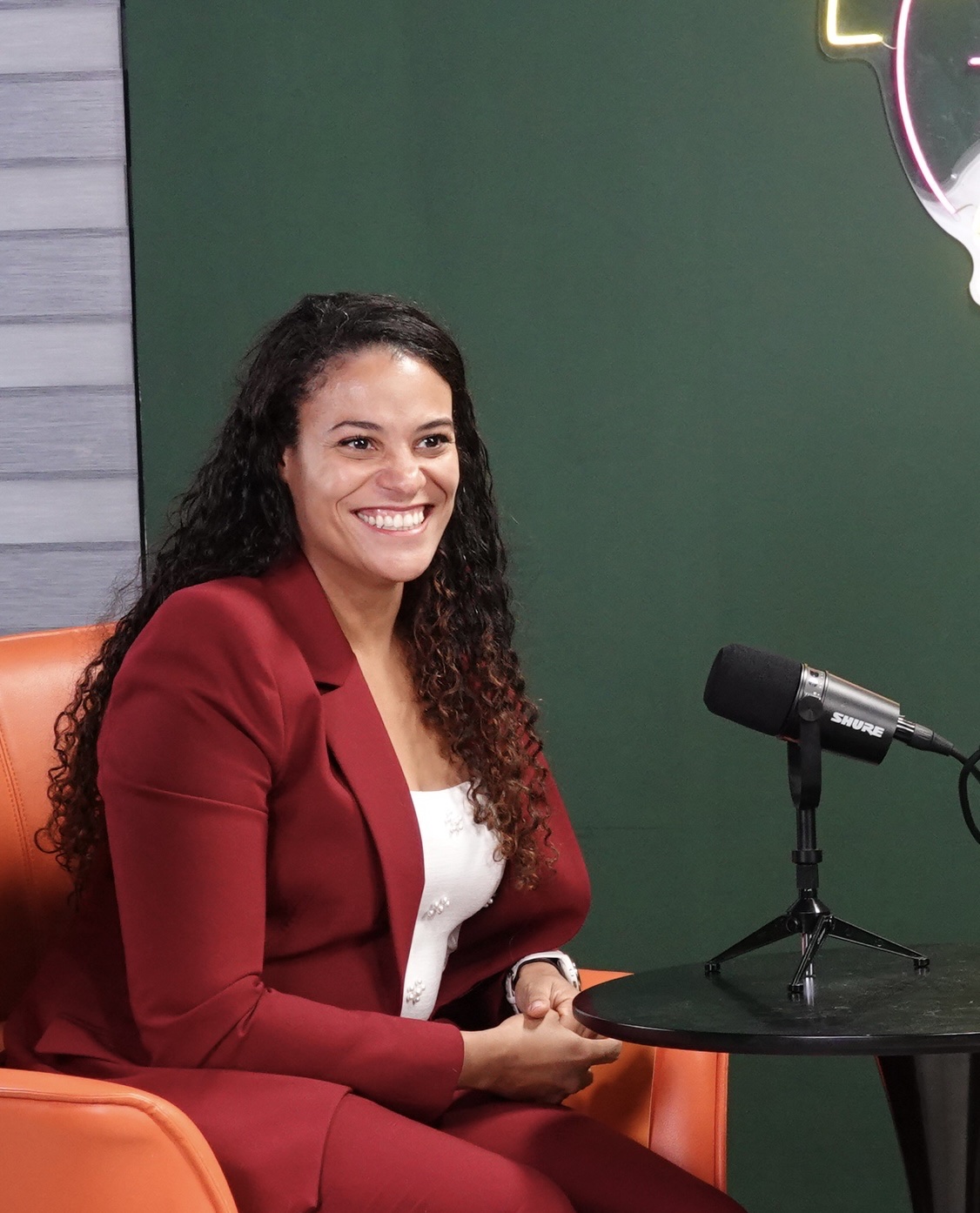 Consul General Raissa Marteaux's message to young people



Max: 1500 characters
There are no comments yet. Be the first to comment.