


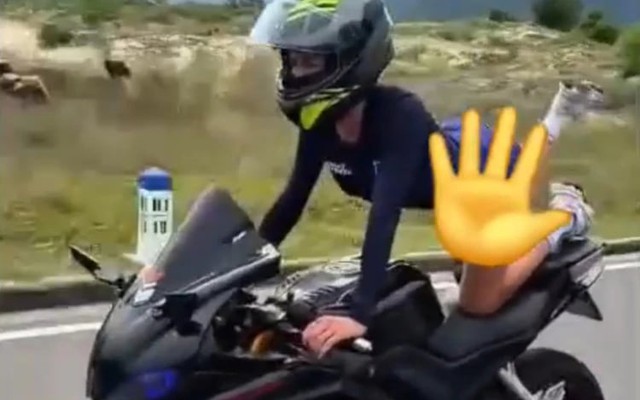
A still image taken from a clip shows Nikitina Iuliia, a Russian tourist, riding a high-capacity motorcycle without protective gear and performing dangerous and inappropriate stunts in Khanh Hoa Province, south-central Vietnam.
Editor’s note: This article was written by Baz Mattaz, a British living in Vietnam, following a recent case involving a Russian woman who was deported for performing dangerous motorcycle stunts on Vietnamese roads.
In the article, the author shares his personal perspective on respecting and complying with the laws of another country.
Tuoi Tre News has edited the article for clarity, readability, and style.
Vietnam is seeing a huge increase in international tourism. With millions of people visiting each year, it is inevitable that a small number will behave badly. That doesn’t make the behaviour acceptable, but it does mean that isolated incidents should be kept in perspective.
The recent case of a Russian woman who repeatedly performed dangerous motorcycle stunts on Vietnamese roads is a good example.
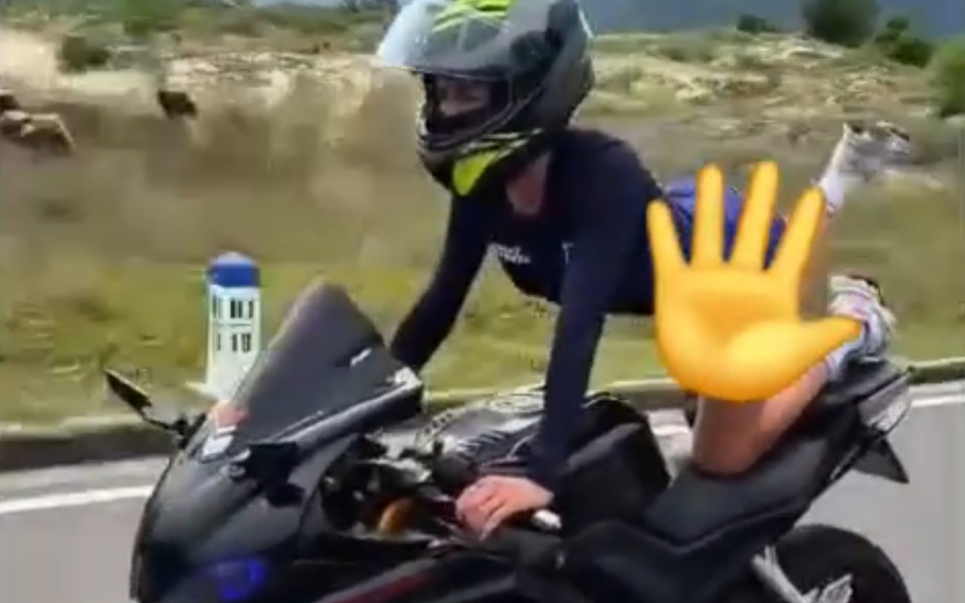
There is no excuse for what she did. She repeatedly rode while kneeling on the seat, without protective equipment, and the behaviour was filmed, edited and posted on social media, attracting widespread attention.
This wasn’t simply a momentary lapse in concentration. It appears to have been deliberate behaviour, repeated for the cameras and, presumably, to attract attention and build a reputation online. Vietnamese authorities were entirely justified in taking action.
She was convicted of disturbing public order and fined VND30 million (US$1,154), as well as being permanently expelled from Vietnam. Those are significant consequences. But compared to what she might have received in other countries including her own it could have been considerably higher.
France is also strict in dealing with what it calls motorised 'urban rodeos.' Serious offences of this type can carry a maximum fine of 40,000 euros and three years in prison.
And in my country, the UK, dangerous driving like drink-driving carries months to years in prison, a fine and mandatory disqualification from driving.
The important point is not that Vietnam punished this woman too harshly or too lightly. It is that the behaviour itself is regarded as serious in most countries, including her own.
There is also a useful Vietnamese comparison. In 2023, Vietnamese model and actress Ngọc Trinh was filmed performing dangerous motorcycle stunts on public roads in Ho Chi Minh City.
She was subsequently convicted of disturbing public order and received a one-year suspended prison sentence.
That case demonstrates something important. Vietnam does not only enforce its laws when the person involved is a foreigner. Vietnamese citizens can, and do, face serious consequences for similar behaviour.
Most people would probably agree that when we travel to another country, we have an even greater responsibility to respect its laws. We are guests. We have chosen to visit somebody else’s country, and we should expect to follow its rules.
A personal example. I have a full motorcycle license and a legal International Drivers Permit. But recently my UK license expired. Even though I could have legally continued driving in the UK whilst I waited for the replacement, I chose to downgrade to a 50cc motorcycle here to make sure that I remained fully compliant with Vietnamese law.
Be safe, be respectful, be legal, and you have nothing to fear from the Vietnamese police.
- REFERENCE MORE
- REFERENCE MORE
- REFERENCE MORE









Max: 1500 characters
There are no comments yet. Be the first to comment.