


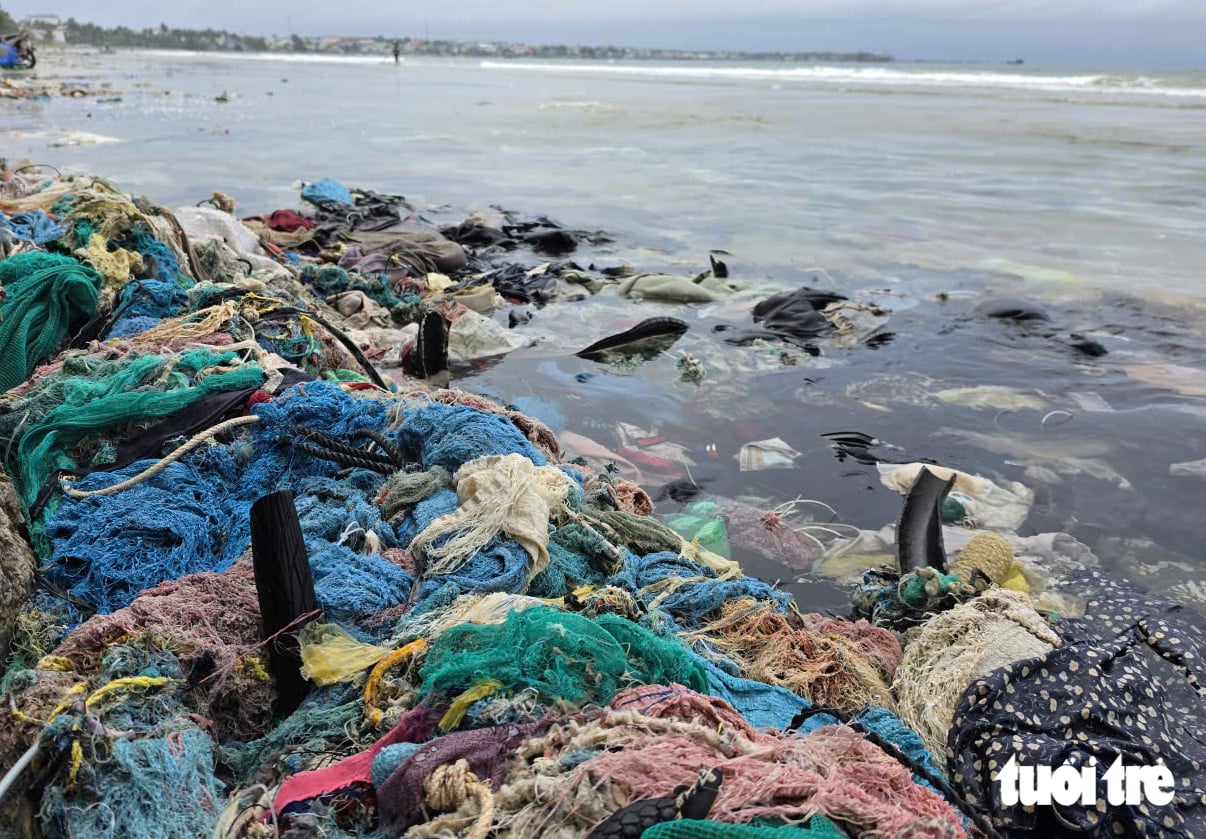
Trash floats near the shore at Mui Ne’s Front Beach in September 2026 despite efforts by local authorities to collect it. Photo: Duc Trong / Tuoi Tre
A popular beach destination in Lam Dong Province, Mui Ne is known for its long sandy beaches and thriving tourism industry.
Its beaches attract tourists from Vietnam and abroad, who are drawn by the area’s scenic coastline and water sports such as kitesurfing and windsurfing.
'Ocean waste' in Mui Ne?
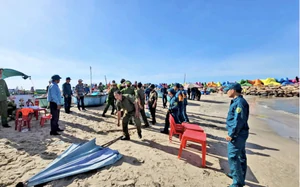
According to Tuoi Tre (Youth) online newspaper observations, in recent days, authorities in Mui Ne Ward, Lam Dong Province have repeatedly mobilized excavators, dump trucks, officials, employees, and volunteers to collect trash from several local beaches.
These efforts have helped clean up some of the litter-strewn beaches, but they have yet to solve the problem completely, as similar situations occur almost every year.
Local authorities refer to it as 'ocean waste,' which washes ashore seasonally.
At the Front Beach, particularly along the seawall near the local fishing village, trash remains scattered from the water to the shoreline, including seashells, fishing gear, plastic bags, old clothes, and plastic items.
According to the Mui Ne Ward People’s Committee, ocean waste occurs seasonally and is mainly influenced by wind direction, waves, tides, and ocean currents.
During the southerly wind season, roughly from April to October each year, trash tends to drift ashore and accumulate along the Front Beach.
During the north-easterly wind season, the waste tends to wash up along the Back Beach.
The waste does not wash ashore evenly in terms of either location or density.
The affected areas and amount of waste frequently change, and no specific recurring cycle has been identified.
As the tide rises and falls, waves continue to carry the trash from one area to another.
This makes it difficult for local authorities to determine the scope and volume of waste and organize a complete clean-up.
Ward authorities acknowledge that besides waste drifting in from the sea, some residents also dump and dispose of trash directly on the beach on a daily basis, significantly increasing the amount of waste generated and left behind.
For now, the locality is relying on manual clean-up efforts, while a comprehensive solution would require greater resources and the involvement of multiple agencies and organizations.
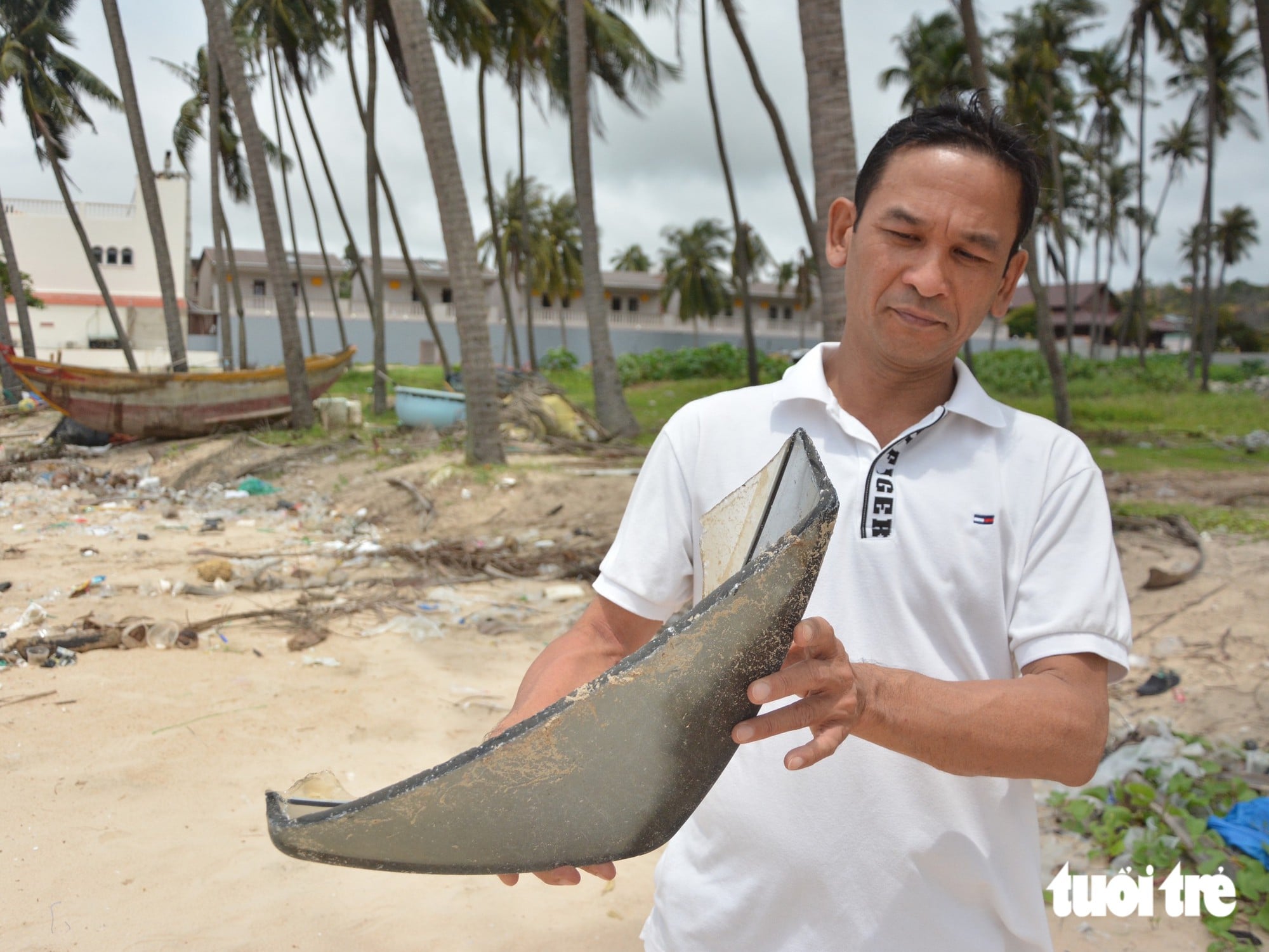
The waste includes not only plastic bottles and bags but also broken pieces of glass. Photo: Duc Trong / Tuoi Tre
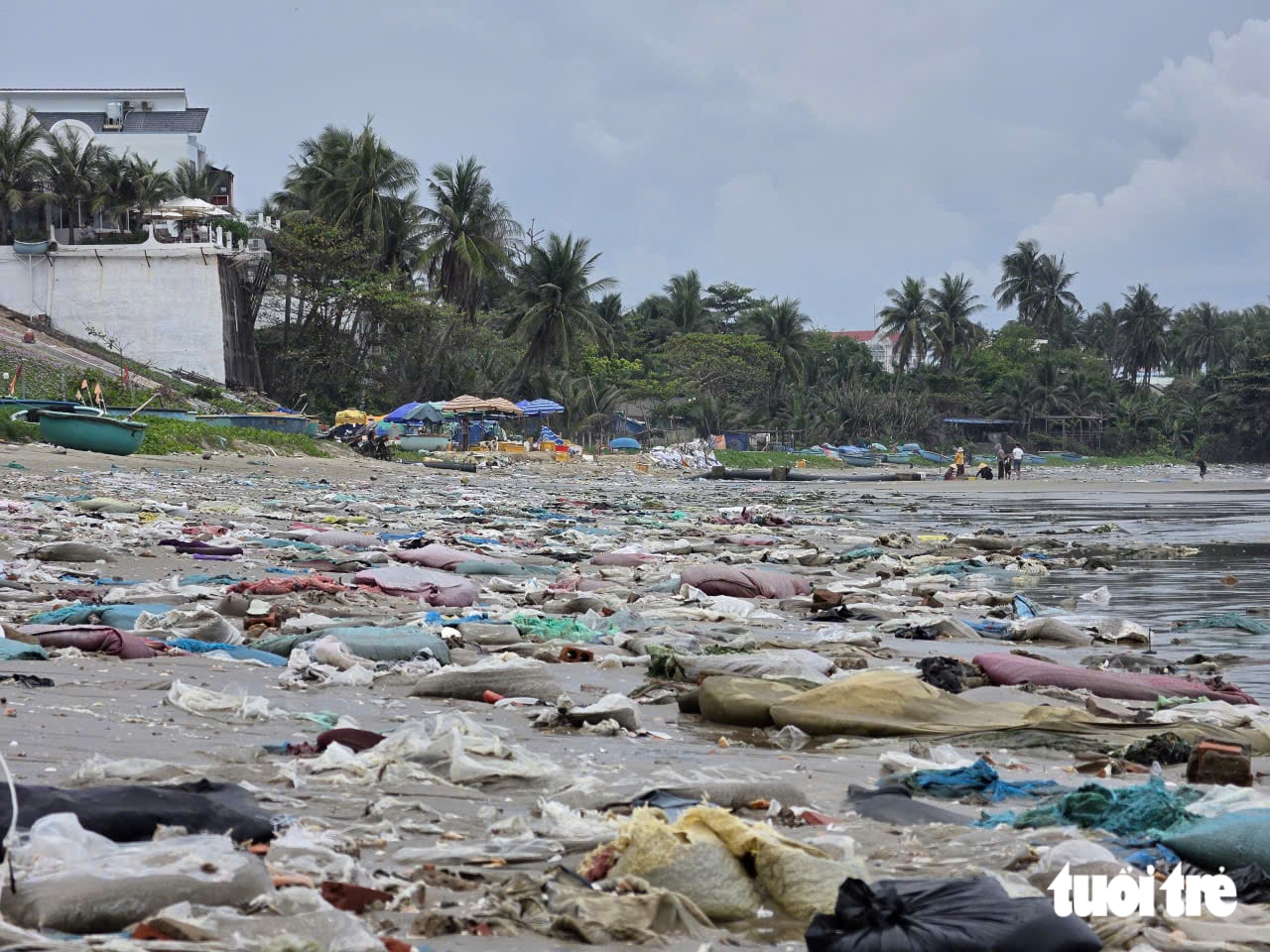
As the tide recedes, a section of the beach along the seawall near Mui Ne’s fishing village is covered with trash. Photo: Duc Trong / Tuoi Tre
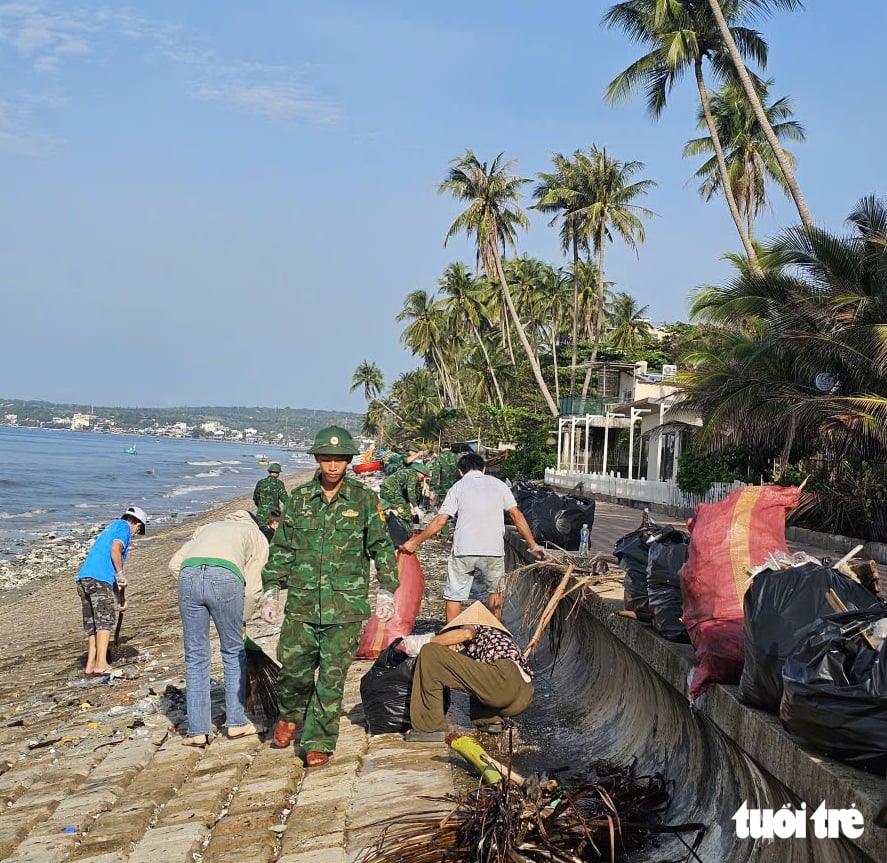
Mui Ne Ward has repeatedly mobilized officials, volunteers, and armed forces to join efforts to clean up the trash. Photo: Duc Trong / Tuoi Tre
'People dump it and the sea gives it back'
Nguyen Ngoc Tuyen, 50, who regularly swims at Rang Beach in Mui Ne, said he was saddened to see trash continuously washing ashore.
According to Tuyen, Mui Ne is blessed with a favorable climate and beautiful scenery, but its trash problem is a downside.
Whether the waste comes from the ocean or elsewhere, he said, it is ultimately dumped by people and returned by the sea.
“Local authorities have made great efforts to clean up the trash, but that alone is not enough,” Tuyen said.
“The locality should install more trash bins along the beach so that residents and tourists can pick up any trash they see and put it in the bins.
“If we do that every day, the amount of trash will gradually decrease.”
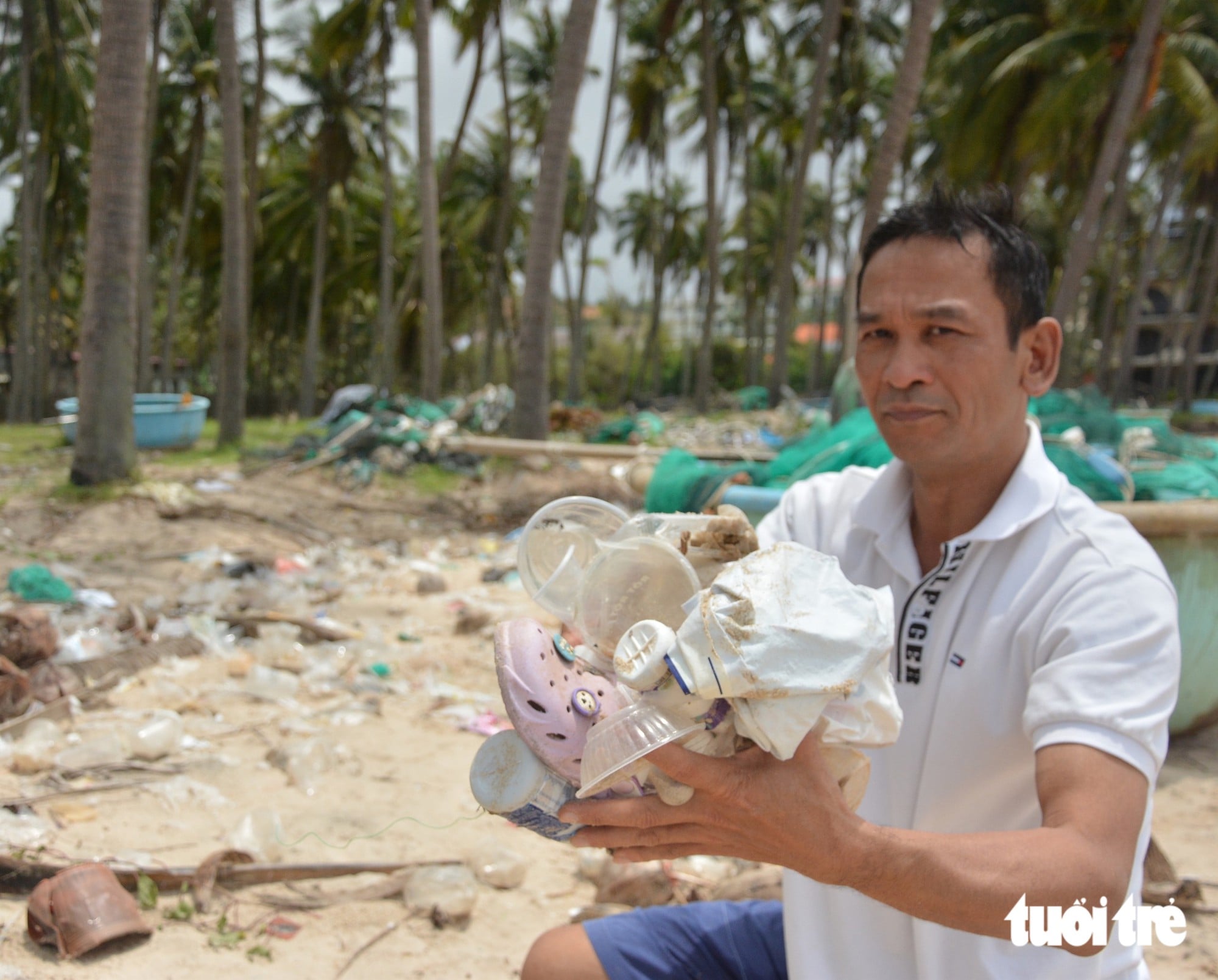
Plastic items and discarded household goods are washed back ashore. Photo: Duc Trong / Tuoi Tre
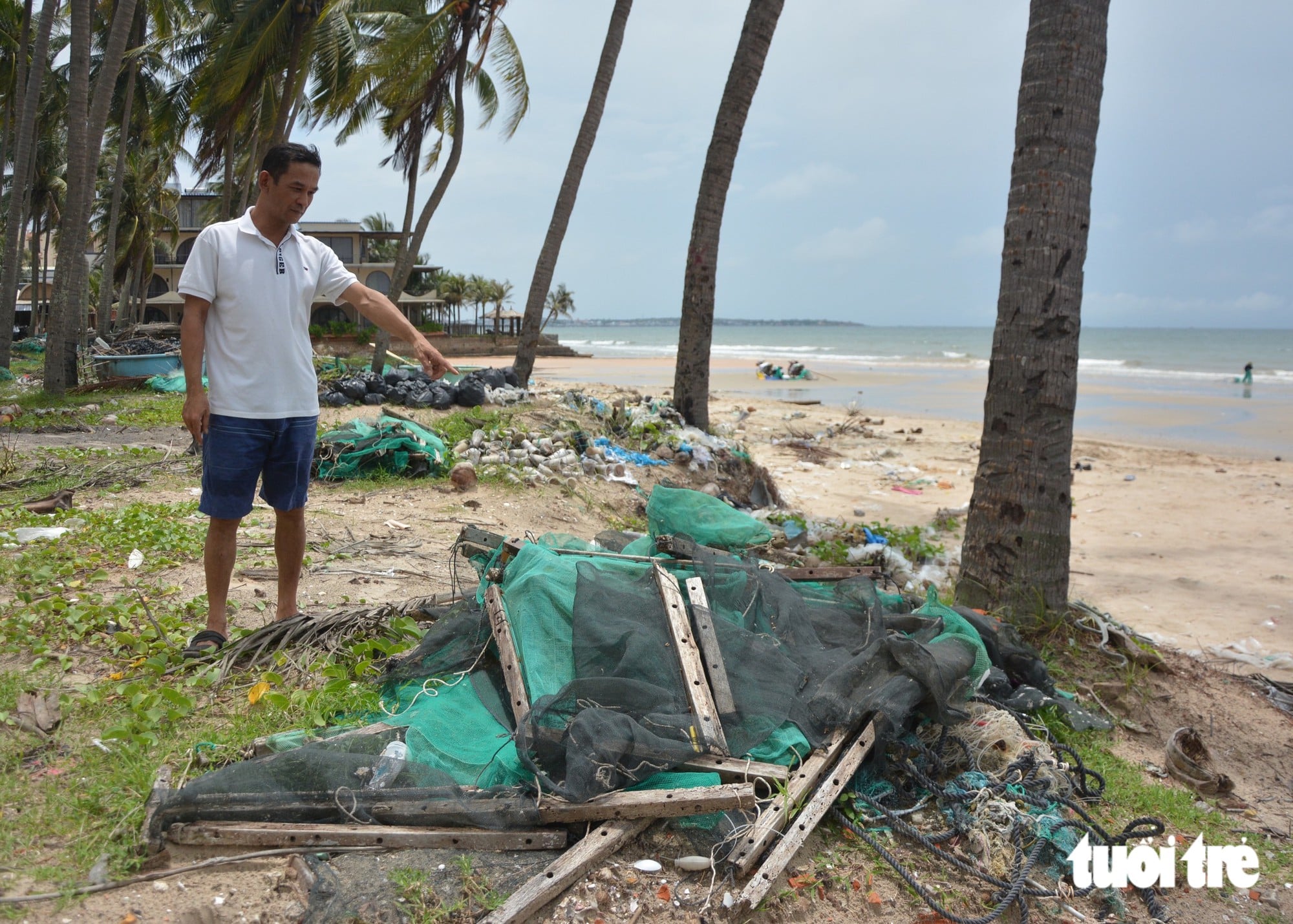
Discarded fishing gear also contributes to the unsightly amount of trash along Mui Ne’s beaches. Photo: Duc Trong / Tuoi Tre
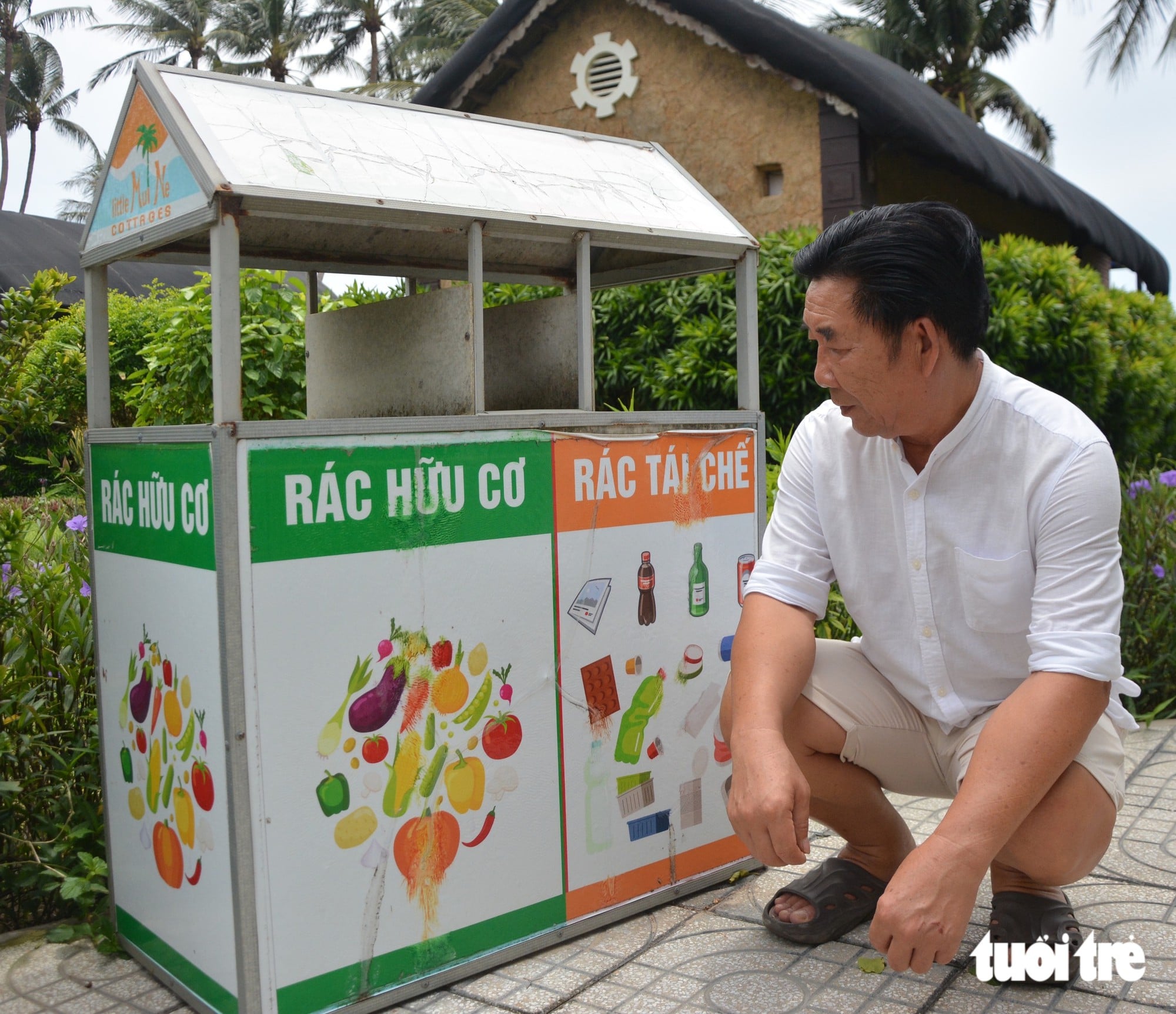
According to Nguyen Van Binh, vice-chairman of the Lam Dong Tourism Association, preventing littering and sorting waste at the source are necessary to reduce the pressure on Mui Ne. Photo: Duc Trong / Tuoi Tre
Nguyen Van Binh, vice-chairman of the Lam Dong Tourism Association, said the source of the waste must be identified and addressed in order to tackle the problem at its root.
"Calling it 'ocean waste' is unfair to the sea. No one lives in the ocean to dump trash there. It still comes from people dumping waste from the shore," Binh said.
"Localities need to take stronger action against littering, impose tougher penalties and prevent waste at the source.
"Then there will certainly be less trash in the sea.
"I feel that this situation is causing many difficulties for Mui Ne.
"Everyone can see the problem, and we should work together to address it.
"Those who litter need to see the people who have to collect their trash so they can understand the consequences and become more aware, to make Mui Ne a place of blue seas, white sand and golden sunshine, rather than a beach that looks like a landfill."








Max: 1500 characters
There are no comments yet. Be the first to comment.