


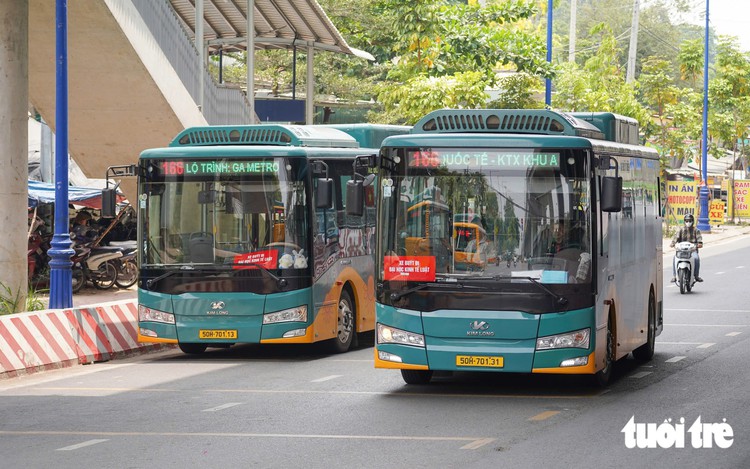
This illustrative photo shows electric buses connecting with metro line No. 1 in Ho Chi Minh City. Photo: Thuan Van / Tuoi Tre
The DRT service, earlier proposed by the municipal Department of Construction, would operate within areas and corridors approved by the municipal administration, connecting residential areas with public transport routes and urban railways.
The new model would use minibuses with small passenger capacity, preferably powered by electricity or other green energy sources, according to the draft decision prepared by the department for the municipal administration’s consideration.
The vehicles would be required to carry a 'xe buyt' (bus) sign, while their drivers would have to meet regulatory requirements.
The model would be considered in areas where the existing public transport network does not adequately serve passengers, in sparsely populated residential areas, and in places requiring connections to urban railway stations and other public transport hubs.
The model is needed partly because more than 60 percent of Ho Chi Minh City's urban road network consists of narrow alleys and lanes that conventional buses have difficulty accessing, according to the draft decision.
At peak times, DRT buses could either operate like conventional buses along fixed routes with fixed stops or switch to on-demand operations.
During off-peak hours, the buses would operate on demand and serve only designated locations.
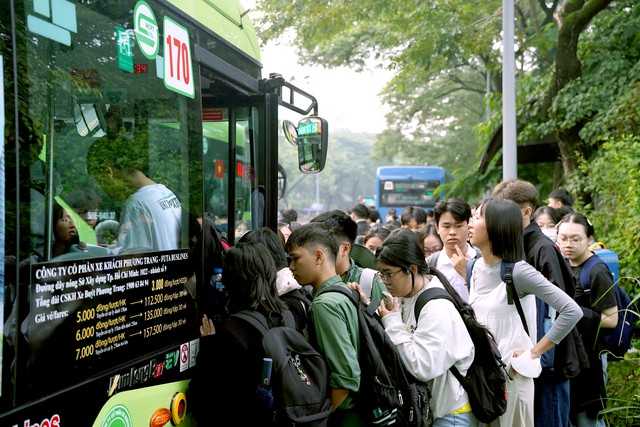
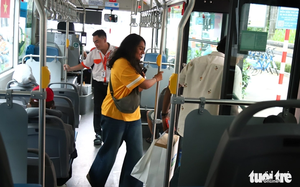
A bus picks up passengers in Ho Chi Minh City. Photo: Thuan Van / Tuoi Tre
Under the flexible option, buses would pick up and drop off passengers at locations on a published list based on requests made through the app.
Pickup and drop-off locations would be selected based on actual demand, traffic organization plans, and safety conditions before being publicly announced.
The system could also combine trips, adjust routes or change pickup and drop-off points when capacity, service time, and safety requirements are met.
The DRT system would receive passenger requests, dispatch vehicles, determine pickup and drop-off points, arrange routes, process payments, and store trip data through a technology platform.
The data would be connected and shared with management agencies for monitoring, supervision, and evaluation.
The municipal administration is to issue regulations governing the on-demand transport model, which has yet to be specifically covered by current regulations, while the construction department would be authorized to organize its implementation after the regulations take effect, according to the draft decision.
Ho Chi Minh City currently has 180 bus routes, including 109 receiving financial support and 71 operating without subsidies, serving about 270,000 passenger trips a day.
Public transport met about seven percent of the city's travel demand in 2025.








Max: 1500 characters
There are no comments yet. Be the first to comment.