
Very strong El Niño may bring fewer storms, rainfall shortages to central Vietnam
Vietnam may experience fewer storms and tropical depressions in the coming months, while parts of the central region could face rainfall shortages even during the peak of the rainy season, as a very strong El Niño continues to affect weather patterns.
The National Center for Hydro-Meteorological Forecasting made the assessment in its national climate outlook for November 2026 through April 2027, issued on Thursday.
El Niño likely to persist until first half of summer 2027
El Niño is expected to remain very strong from November 2026 through January 2027, with a 96-percent probability, up three percentage points from the forecast for the same period issued the previous month.
From February through April 2027, the phenomenon is expected to persist but gradually weaken. It may continue weakening afterward and remain in place until the first half of summer 2027 before gradually returning to neutral conditions.
Under the influence of the very strong El Niño, Vietnam is forecast to experience warmer weather and fewer storms and rain events through April 2027.
From November 2026 through January 2027, the number of storms and tropical depressions over the East Vietnam Sea and those making landfall in Vietnam is expected to be below the long-term average.
The average for this period is about 2.8 storms and tropical depressions over the sea, with around 1.1 making landfall.
From February through April 2027, storms and tropical depressions are unlikely to form over the East Vietnam Sea.
Warmer winter expected, with early hot weather in south
In November and December 2026, moderate to heavy rainfall may still occur in central Vietnam, particularly from Ha Tinh to Hue and along the south-central coast.
However, many areas of central Vietnam could receive less rainfall than the long-term average even during the main rainy season. Widespread heavy rain is expected to become less frequent from January 2027.
From November 2026 through April 2027, northeasterly monsoon activity is forecast to be weaker than average.
Severe cold spells in northern Vietnam and the north-central region may arrive later than usual, with fewer days of intense cold. However, brief but sharp drops in temperature remain possible.
During the latter part of winter, northern Vietnam is also expected to experience fewer days of light rain and drizzle than usual.
In the eastern part of southern Vietnam, hot weather may begin as early as February 2027, earlier than the long-term average.
Heat is expected to intensify across southern Vietnam in March and April. Localized heat may also occur in the northwestern region from March.
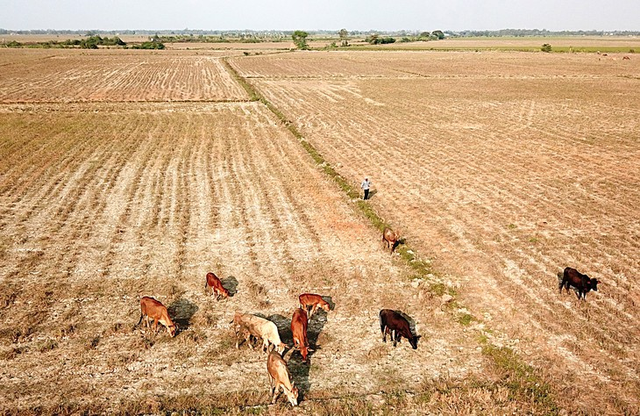
The very strong El Niño is expected to leave the Central Highlands and southern Vietnam facing drought risks during the 2026-2027 dry season. Photo: Chi Quoc / Tuoi Tre
With weaker northeasterly monsoon activity and the early onset of hot weather, average temperatures nationwide in November are forecast to be 1-2 degrees Celsius above the long-term average.
In December 2026 and January 2027, temperatures are expected to be 0.5-1.5 degrees Celsius above average, while the Central Highlands and southern Vietnam could see temperatures 1-2 degrees Celsius above average.
From February through April 2027, average temperatures nationwide are forecast to be 1-2 degrees Celsius above the long-term average, with some places exceeding it by more than two degrees Celsius.
No signs of storms over East Vietnam Sea in October
Ta Thi Hong An, a forecaster with the National Center for Hydro-Meteorological Forecasting's climate forecasting division, said on Thursday that the very strong El Niño had begun to have a clear impact on Vietnam's weather.
Temperatures nationwide in September and the first half of October were generally 1-2 degrees Celsius above the long-term average.
During the first half of October alone, 59 meteorological stations recorded daily maximum temperatures that equaled or exceeded historical records for the same period.
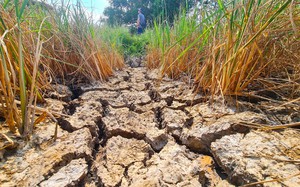
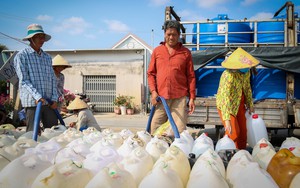
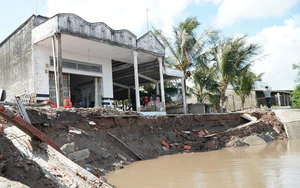
No storms are currently indicated over the East Vietnam Sea through the end of October 2026, according to the forecast.
From November 2026 through January 2027, only around one or two storms are expected over the sea, with little likelihood of affecting mainland Vietnam.
For the remaining months of 2026, rainfall in central Vietnam is expected to be below the long-term average. The rainy season in the Central Highlands and southern Vietnam may also end earlier than usual.
As a result, river flows in central and southern Vietnam are expected to fall. Saltwater intrusion in the Mekong Delta could begin earlier and become more severe than the long-term average and the same period in 2026.
Local authorities should proactively implement measures to prevent drought and saltwater intrusion and ensure water supplies for agricultural production and daily life, An advised.
Thanh Ha - Chi Tue / Tuoi Tre News
Link nội dung: https://news.tuoitre.vn/very-strong-el-nio-may-bring-fewer-storms-rainfall-shortages-to-central-vietnam-103261016113314166.htm