
Vietnam struggles with shrimp seed self-sufficiency, experts urge action
Vietnam faces major challenges in securing a reliable supply of high-quality shrimp seed, with lobster seed still largely sourced from wild catches and imports, while whiteleg shrimp broodstock depends on imports and black tiger shrimp seed relies substantially on wild catches, prompting experts to recommend solutions.
The issue was highlighted at a workshop organized by the Ministry of Science and Technology in coordination with the Ministry of Agriculture and Environment and Khanh Hoa Province's administration on Sunday.
According to a report presented at the event, Vietnam has about 750,000 hectares of brackish-water shrimp farms, producing approximately 1.29 million metric tons annually, while shrimp exports are worth around US$4.6 billion, or nearly 48 percent of the country's total seafood export value.
Yet the industry needs 150-160 billion juvenile shrimp for commercial farming each year, while whiteleg shrimp broodstock remains dependent on imports and black tiger shrimp seed relies substantially on wild catches.
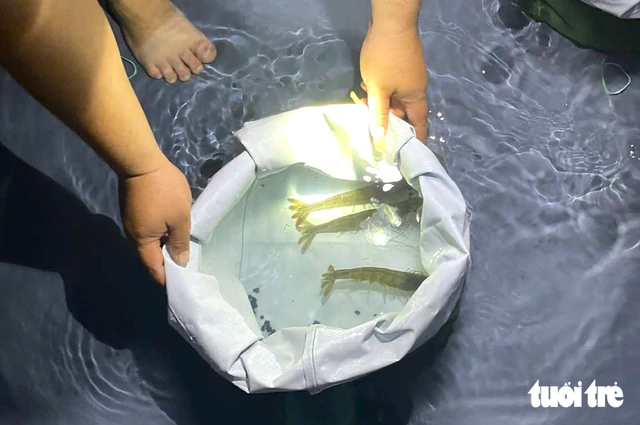
Shrimp juveniles are released into a farming area in southern Khanh Hoa Province. Photo: Duc Cuong / Tuoi Tre
Seed quality is another concern, as some hatcheries continue operating without having been inspected or certified, while production and rearing conditions vary among facilities, potentially affecting seed quality and farming efficiency.
The shortage is particularly acute for marine lobsters, with annual demand for seed estimated at 100-150 million juveniles.
Domestic production meets only about 10 percent of demand for spiny lobster seed, while green lobster seed remains entirely dependent on imports, according to the report.
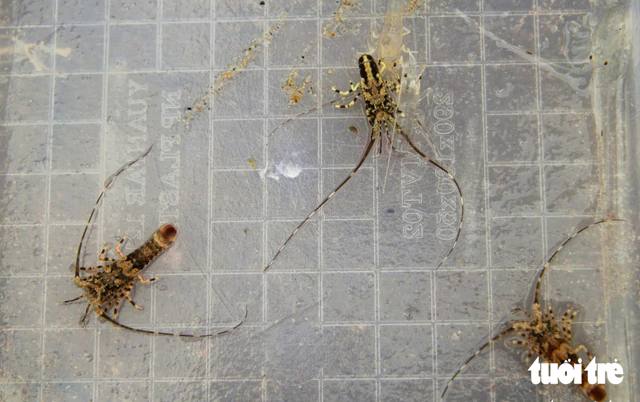
Lobster seed in Vietnam is currently sourced mainly from wild catches and imports. Photo: Duc Cuong / Tuoi Tre
Despite years of research, Vietnam has yet to master artificial lobster seed production.
The main technical bottleneck is the transition from the phyllosoma larval stage to the puerulus stage.
Lobster larvae take around 150-180 days to develop through 20-22 molts, requiring close control of feed, water quality, microbial communities and water flow.
High mortality rates and operating costs make it difficult to develop a viable production process for commercial-scale operations.
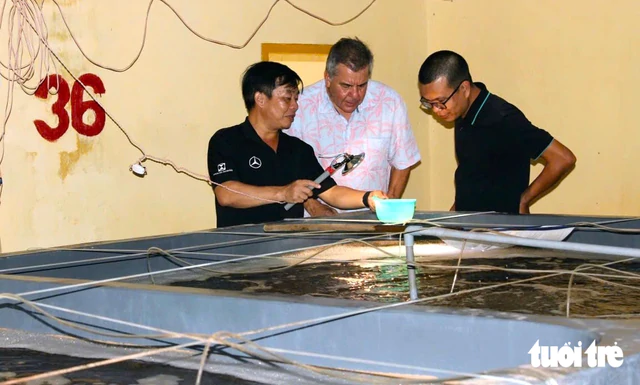
Experts examine shrimp seed during a workshop on shrimp breeding technologies in Khanh Hoa Province. Photo: Duc Cuong / Tuoi Tre
To address these challenges, Vietnam needs to strengthen its capacity to produce domestic broodstock and develop shrimp strains that grow faster, resist disease and adapt better to climate change, Minister of Science and Technology Vu Hai Quan said.
The research agenda through 2035 includes genome-based breeding to develop improved strains.
Research institutions, universities and businesses need to work more closely together to upgrade hatchery infrastructure, improve quality-testing systems and strengthen genetic-resource management.
Research must go beyond laboratory results to deliver stable production processes that can be transferred to businesses and meet practical needs.
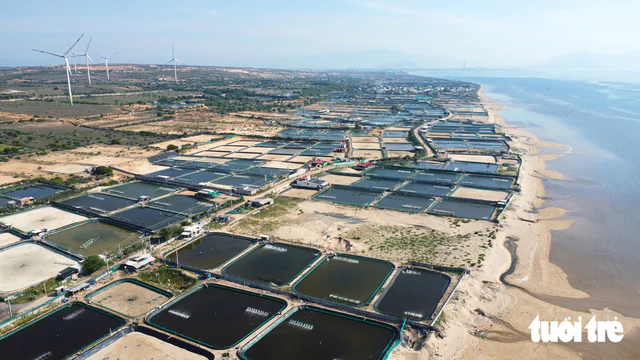
A shrimp farming area along the coast of Khanh Hoa Province, south-central Vietnam. Photo: Duc Cuong / Tuoi Tre
For lobster, the priority is to overcome technical barriers to artificial seed production, while for brackish-water shrimp, efforts should focus on improving domestic broodstock capacity and developing high-quality, disease-resistant strains.
Effective oversight is also needed across the entire seed supply chain, from production and distribution to use, with local authorities and specialized agencies stepping up hatchery inspections, import controls, quarantine enforcement and seed traceability.
Many experts recommended that businesses be involved from the outset in identifying breeding needs, testing new strains and assessing their quality and suitability for commercial farming, helping bridge the gap between research and practical application.
In addition, sustained research funding and stronger international cooperation are essential to access advanced technologies, gradually reduce reliance on imported and wild-caught seed, improve farming efficiency and strengthen the competitiveness of Vietnam's shrimp industry.

Vinh Tho - Duc Cuong / Tuoi Tre News
Link nội dung: https://news.tuoitre.vn/vietnam-struggles-with-shrimp-seed-self-sufficiency-experts-urge-action-103261018202520522.htm