


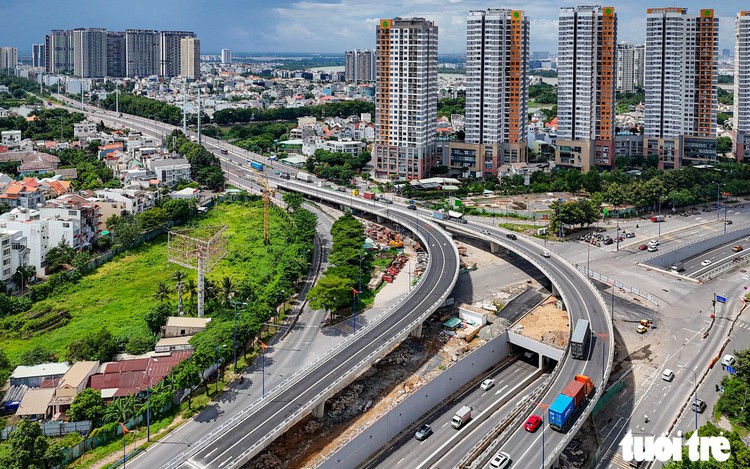
An overview of the An Phu intersection project, one of the key infrastructure developments currently under construction to alleviate traffic congestion in Ho Chi Minh City. Photo: Chau Tuan / Tuoi Tre
The strategic initiative aims to tackle persistent gridlock through a structured timeline, with 15 hotspots scheduled for resolution during the 2026–27 period and the remaining 13 addressed between 2028 and 2030.
Among these projects, 33 have already secured funding and met all necessary conditions for immediate implementation.
To address pressing bottlenecks, ongoing developments include the An Phu and My Thuy intersections, the expansion of National Highway 50, the Nguyen Khoai bridge-road project, and section 3 of Beltway No. 2 from Pham Van Dong Street to the Go Dua - National Highway 1 intersection.
Additionally, the Ho Chi Minh City - Moc Bai expressway is under construction alongside land clearance efforts, while compensation and site clearance are underway for the Ho Chi Minh City - Thu Dau Mot - Chon Thanh expressway.
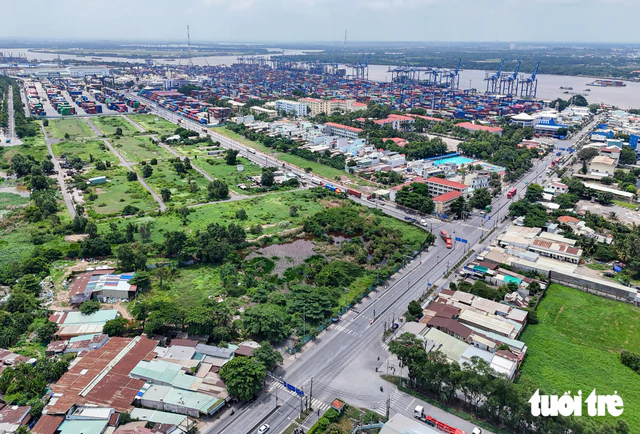
Starting point of the Cat Lai - Phu Huu inter-port road project in Ho Chi Minh City. Photo: Chau Tuan / Tuoi Tre
City authorities are also preparing to break ground on several urgent infrastructure works, including the Thu Thiem 4 Bridge, the Cat Lai - Phu Huu inter-port road, the Go Cong intersection, the expansion of the Hanoi Highway connection branch, and environmental restoration for the Van Thanh canal.
Furthermore, major transit expansions will be carried out, such as the extension of metro line No. 1 and metro line No. 2 toward Binh Duong Province, the first phase of metro line No. 6 spanning from Tan Son Nhat International Airport to Phu Huu, and the Thu Thiem - Long Thanh railway line.
Further network expansions slated between 2026 and 2030 feature the Rach Doi Bridge, steel overpasses at the six-way Democratic Square roundabout, steel overpasses along 3/2 Street at the Le Dai Hanh and Ly Thuong Kiet intersections, an underground passage along Ton Duc Thang Street, and the widening of Xo Viet Nghe Tinh and Dinh Bo Linh Streets.
Public-private partnership and build-operate-transfer ventures will cover the expansion of National Highway 13 from the Binh Trieu Bridge to the Binh Duong border, as well as the widening of the Hanoi Highway - National Highway 1 corridor from Station 2 to the Tan Van intersection.
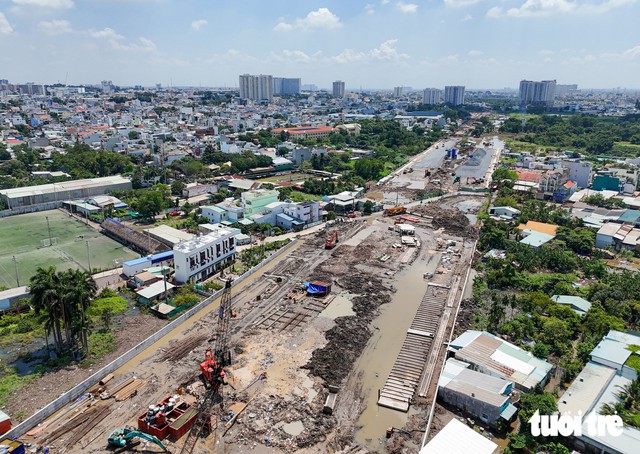
Construction site of the Beltway No. 2 project in Ho Chi Minh City. Photo: Chau Tuan / Tuoi Tre
Overall, the 98 targeted projects span nine distinct geographical areas, encompassing the city center, the northeast, northwest, east, and south regions, alongside the areas of Tan Son Nhat International Airport, Cat Lai Port, Binh Duong, and Ba Ria - Vung Tau.
Persistent congestion zones—such as the Ton Duc Thang - Nguyen Huu Canh - Nguyen Binh Khiem corridor, the Hang Xanh intersection, Xo Viet Nghe Tinh Street, and the Nguyen Van Linh intersections with National Highway 50 and Nguyen Huu Tho Street—remain primary focuses for urban management.
Alongside physical construction, municipal agencies are implementing complementary operational measures including traffic re-routing, signal adjustments, median modifications, and lane expansions.
Current implementation challenges primarily involve delays in technical infrastructure relocation, required planning adjustments for appraisal and approval processes, aggregate material shortages during peak construction periods, and necessary revisions to consulting documentation.


Max: 1500 characters
There are no comments yet. Be the first to comment.